
Discovery and Geographic Rarity
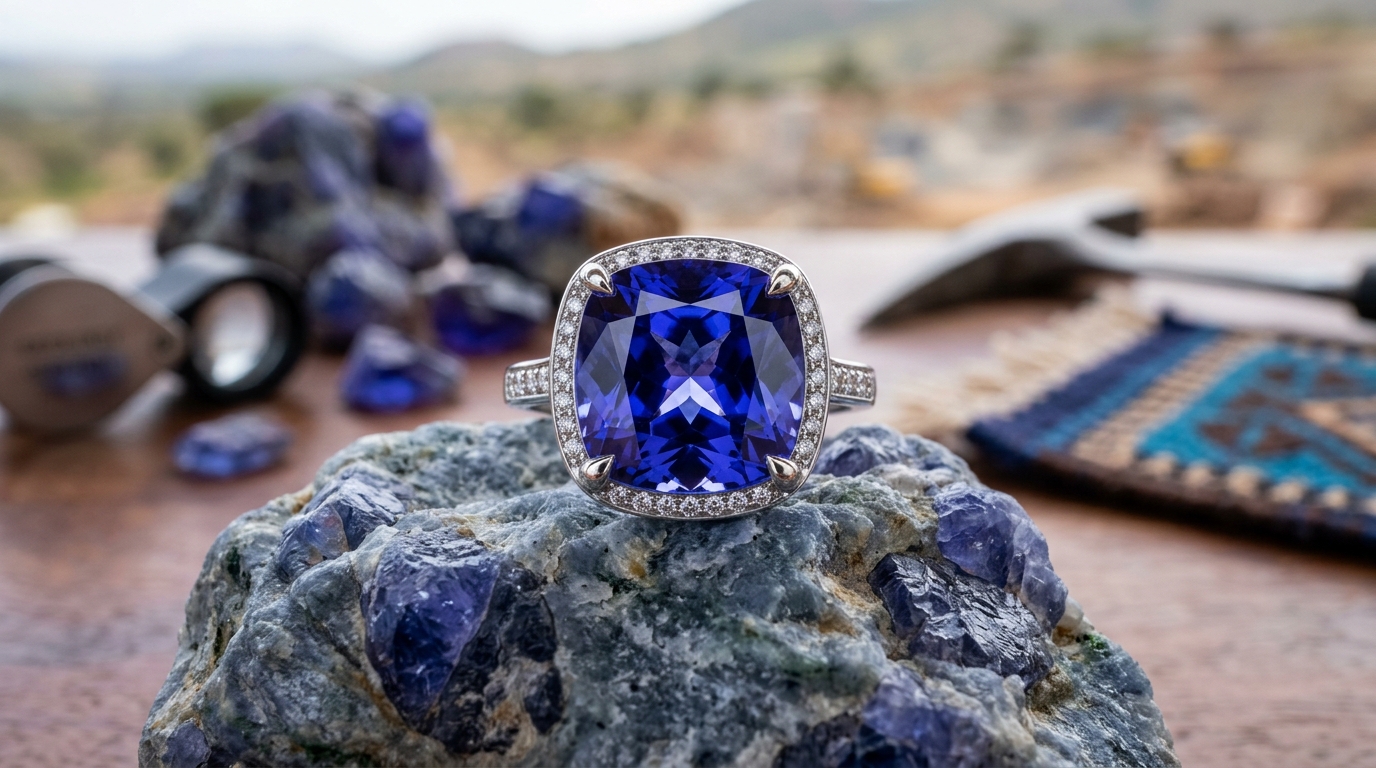
Tanzanite is one of the most amazing gemstones of our time. It is highly sought after because of its deep blue violet color and because it comes from only one place in the world. Tanzanite was first found in 1967 in northern Tanzania, just south of Mount Kilimanjaro. It is found only in one small mining area in the world, making it rare and limited.
Mineralogical Identity and Optical Phenomenon
Tanzanite is a type of zoisite mineral known for its trichroism, meaning it can show different colours depending on the angle from which it is viewed.
Trichroism: A Display of Three Colours
Blue, violet, and burgundy brown colors can all be found in a single crystal. The best stones have a blue face-up look with flashes of violet. This combination makes tanzanite one of the most beautiful colored gems on the market.
Heat Treatment and Industry Standards
Most tanzanite goes through a gentle heat treatment that is safe and effective. This process removes brownish tones and brings out the gem’s deep blue-violet colours.
Why Heat Treatment Is Accepted
This treatment mimics the natural heat conditions found near the Earth’s surface, and the gem trade considers it standard practice.
Evaluating Colour and Quality
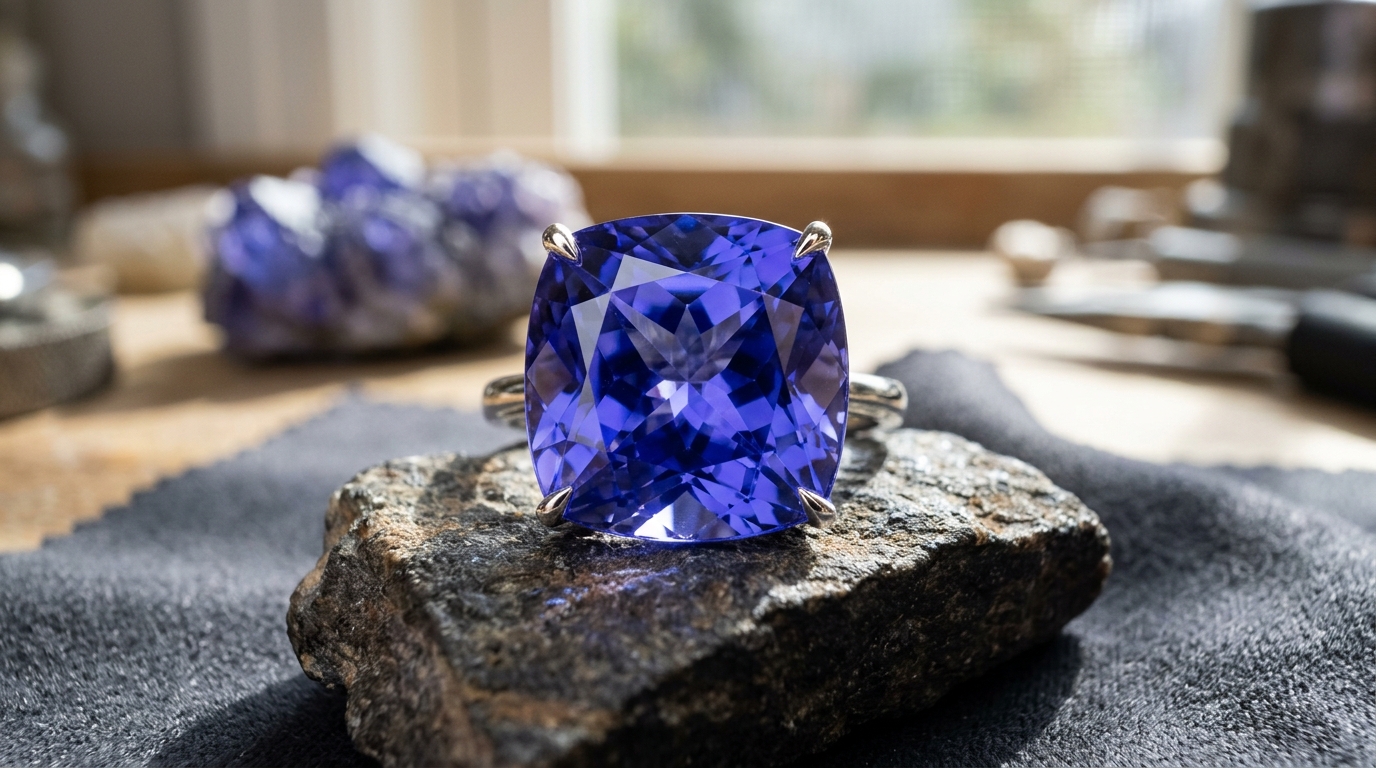
Tone, saturation, and hue balance are used to judge colour quality. The best tanzanites have a rich, medium-dark tone with vivid saturation and a strong blue presence under most lighting conditions.
The Role of Lighting
Lighting plays a very important role in how tanzanite appears:
- Daylight emphasizes blue tones.
- Incandescent light highlights violet and purple hues.
This natural shift in colour gives the gem its distinctive and dynamic character.
Durability and Wearability
Tanzanite is softer and more fragile than sapphire, which it is often compared to. It ranks between 6 and 6.5 on the Mohs hardness scale.
Best Uses in Jewelry
Because of its relative softness, tanzanite is best suited for:
- Earrings
- Pendants
- Carefully worn rings
However, high-quality tanzanite can display excellent crystal clarity and often appears cleaner than sapphires of similar grade.
Rarity and Market Dynamics
Tanzanite’s rarity behaves differently from most other gemstones. Interestingly, smaller top-quality stones are often harder to find than larger ones because more crystal mass is needed to achieve optimal colour saturation.
An Unusual Pricing Structure
As a result, fine tanzanite above one carat can be more difficult to source than larger stones of similar quality. This reverses the typical gemstone pricing pattern, where larger stones usually command greater rarity premiums.
Although tanzanite prices have fluctuated over the years due to political instability, mining challenges, and supply disruptions, it remains relatively undervalued considering its beauty and scarcity. With only one known source and no new deposits discovered, tanzanite stands among the few truly finite gemstones in the world.
A Modern Classic in the Gem World
Tanzanite is a distinctive and elegant gemstone that continues to captivate collectors and designers alike. With its rarity, remarkable colour complexity, and modern discovery history, it holds a unique and enduring place in the world of fine gemstones.