
Understanding the Language: “Custom” vs. True Commission
When people say “custom,” they often mean “adjusted.”
But these are not the same.
Choosing is rooted in certainty.
Commissioning is rooted in trust.
This distinction matters more than it first appears, because it shapes not only the final piece, but the entire experience of creating it.
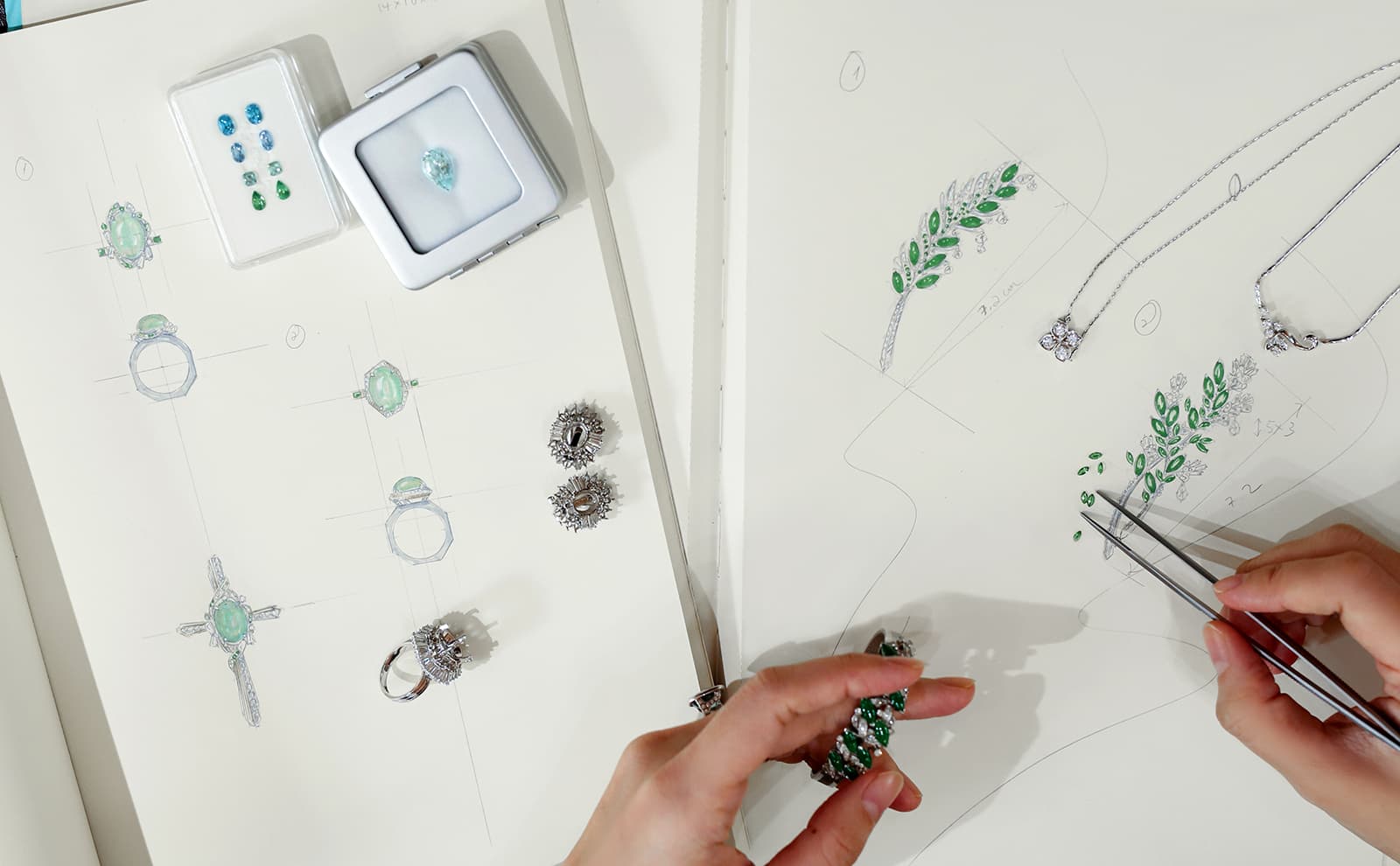
Choosing: Selecting From a Completed World
In a retail setting, the work is already done. Your role is to choose from what exists:
- A design that has already been created
- A size that can be adjusted within limits
- A stone that fits an existing structure
This approach works well for clients who value speed, clarity, and familiarity. It is a process of comparison—evaluating what is available and selecting what feels right.
The structure is comforting. The outcome is visible from the beginning, and the boundaries are already defined.
Commissioning: Beginning From a Blank Page
A commission begins with nothing pre-made.
And that is the point.
There are no templates to select from, and no finished designs to adjust. Instead, the process becomes one of creation—shaped specifically for one person, at one time, in one life.
A commission begins with conversation, then moves through material selection and design as a continuous, evolving process.
It is not about choosing the “best option.”
It is about creating the right one.
The Real Difference: Responsibility
The most significant difference between choosing and commissioning is responsibility.
When you choose, responsibility is shared. The design already exists for a broad audience—you simply decide whether it fits you.
When you commission, responsibility becomes personal. The piece must be right because it is made specifically for you—and because you will live with it.
Paradoxically, this often makes the process feel calmer. It removes the noise of endless comparison and replaces it with clarity and direction.
Beyond Trends: Designing for Proportion and Life
Commissioning is often misunderstood as a way to create something unusual or different.
It is not.
It is a way to create something considered.
A meaningful commission asks deeper, longer-lasting questions:
- How should this piece sit on the hand?
- What does long-term wear actually look like for this person?
- What kind of presence feels honest rather than performative?
- Which details will still feel right in twenty years?
When these questions are answered properly, the design does not feel forced.
It feels inevitable.

Why Commissioning Is Not for Everyone
Commissioning requires a different mindset. It asks for:
- Patience
- Clear intention
- Openness to guidance
- Comfort with an unfolding process
It is not a better path than choosing—it is simply a different one.
Conclusion: Intention Over Selection
If you value intention over repetition, commissioning offers something that selection cannot: a piece that feels truly personal, not merely personalised.
Choosing gives you something that already exists.
Commissioning creates something that belongs.