
While everyone talks about diamonds in fine jewellery conversations, these are not even close to some of the rarest stones on Earth. Padparadscha sapphire, spinel, and alexandrite are among the rarest gems on Earth, available in very small quantities and unknown to most jewellery enthusiasts. The distinction between actual scarcity and public perception is precisely why these stones are so appealing to anyone seeking a truly one-of-a-kind piece. In this guide, we’ll walk you through each stone, explain why they’ve stayed under the radar, and what to know before choosing one.
What Makes a Gem Rare?
Rarity in gems is not just a marketing term, though it is sometimes used that way. True rarity is a matter of geology: how limited the deposits are, how difficult the material is to mine, and how often gem-quality specimens actually turn up. By that measure, there are a number of colored gems that are dramatically rarer than diamond. They’re just not as well known because diamonds have had a century of marketing behind them, and these stones haven’t.
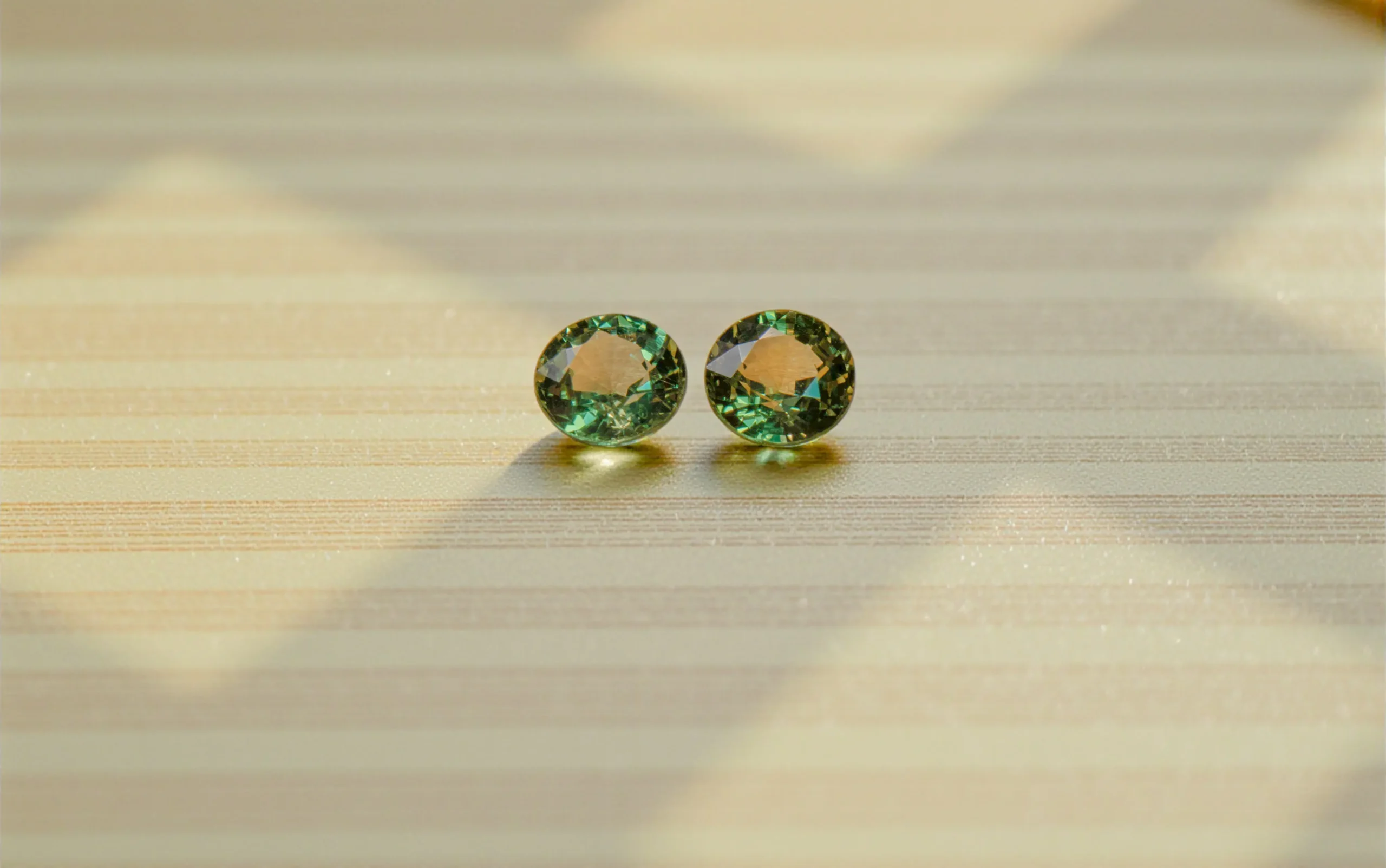
3 Rare Stones You Should Know About
Padparadscha Sapphire
Padparadscha is a variety of corundum, the same mineral family as sapphire and ruby, and is valued for its distinctive colour, a gentle, precise mix of pink and orange, often likened to a sunset. The purer the pink-orange balance, the more valuable the stone. “True padparadscha is a separate category of sapphire that gemological labs consider highly collectible.” True, balanced examples are very rare.
Spinel
For centuries, spinel has literally lived in the shadow of ruby. For most of history, red spinel and ruby were thought to be the same gem, and some of the most famous “rubies” in royal collections, including a centrepiece stone in the British Crown Jewels, were subsequently identified as spinel once mineralogists were able to distinguish between the two in the 18th century. Spinel can be found in many colours other than red, but it has never escaped its role as ruby’s understudy, even though it is a unique and rare gem in its own right.
Alexandrite
The defining characteristic of alexandrite is its colour change, from green to bluish green in daylight to red to purplish red under incandescent light, a result of trace chromium in its crystal structure. Discovered in the Russian Ural Mountains in the 1830s, it became a favourite with the Russian aristocracy for matching the country’s imperial colours. Natural alexandrite in good size and clarity is so rare that most of the alexandrite you see in jewellery today is created in a laboratory, rather than mined.
Why These Stones Are Often Overlooked
One reason these gems have never caught on in the way diamonds have is simple unfamiliarity. Spinel was so long confused with ruby that it never acquired an identity of its own in the public mind. Padparadscha and alexandrite are so rare that most mainstream jewellers rarely have any, so most shoppers don’t even see one to begin with. Rareness doesn’t make a stone noticed, and these three stones prove that some of the most exceptional gems are also the least talked about.
Why Certification and Sourcing Are More Important for Rare Stones
The rarer the stone, the more important authenticity becomes. Since natural alexandrite is so rare, many of the stones sold under this name are lab-created without being clearly identified as such. Treated or imitation stones are common in the marketplace because treatments can alter or imitate the precise colour that determines padparadscha’s value. And spinel has such a long history of being mistaken for other gems that it’s critical to find one with a clear, verifiable identity. “Working with a jeweller who understands these stones and can source them with proper certification is just as important as the stone you select.”
Own a Rare Stone With a Custom Setting at Solitaire x Alex Armen
Such an unusual stone deserves a custom piece, not a stock setting from a catalogue. At Solitaire x Alex Armen, we source real padparadscha, spinel, and alexandrite with proper certification, then design a setting that allows the stone’s rarity and colour to speak for itself, rather than competing with a generic design.
If you are drawn to a stone that is genuinely rare and has a story behind it, our staff can walk you through the sourcing, certification, and custom design process from start to finish. We can also explain how returns and adjustments are handled, so that you can proceed with full confidence in what you are getting.
FAQs
What is the rarest stone in the world?
Rarity is relative to the method of measurement, but stones such as alexandrite, padparadscha sapphire and red beryl are all considered rarer than diamond due to limited gem-quality deposits.
Why is padparadscha sapphire so rare?
It is rare because its distinctive balance of pink and orange colouring occurs naturally in very few corundum specimens. This rarity also contributes to its value, making well-balanced, untreated specimens very hard to find.
Is spinel more rare than sapphire?
Fine red spinel is rarer than most sapphires, but has been overshadowed throughout history because it was confused with ruby for centuries before they were scientifically distinguished.
