
A beautiful ring is more than what meets the eye
When most people look at an engagement ring, they naturally focus on the diamond.
- The sparkle.
- The shape.
- The colour.
- The way it catches the light.
Those elements are important—but they are only part of the story.
A diamond does not become an engagement ring by itself. It requires a carefully engineered structure that supports it, protects it, and allows it to be appreciated from every angle.
The difference between a ring that is simply attractive and one that becomes an heirloom often lies in the details that are almost invisible.
A master jeweller learns to see the architecture beneath the beauty.
The Three Dimensions of a Ring
A ring must succeed in three ways:
1. Beauty
The ring must create emotion.
The proportions must feel natural. The diamond must appear balanced. The design must have a sense of harmony.
2. Wearability
A ring is not a museum piece.
It must be comfortable through everyday life:
- holding a hand,
- working,
- travelling,
- celebrating,
- growing older.
3. Longevity
The ring must survive decades of wear.
- Metal moves.
- Prongs experience impact.
- Surfaces collect scratches.
- Hands change.
A well-made ring anticipates these realities.
The Centre Stone: The Beginning of the Design
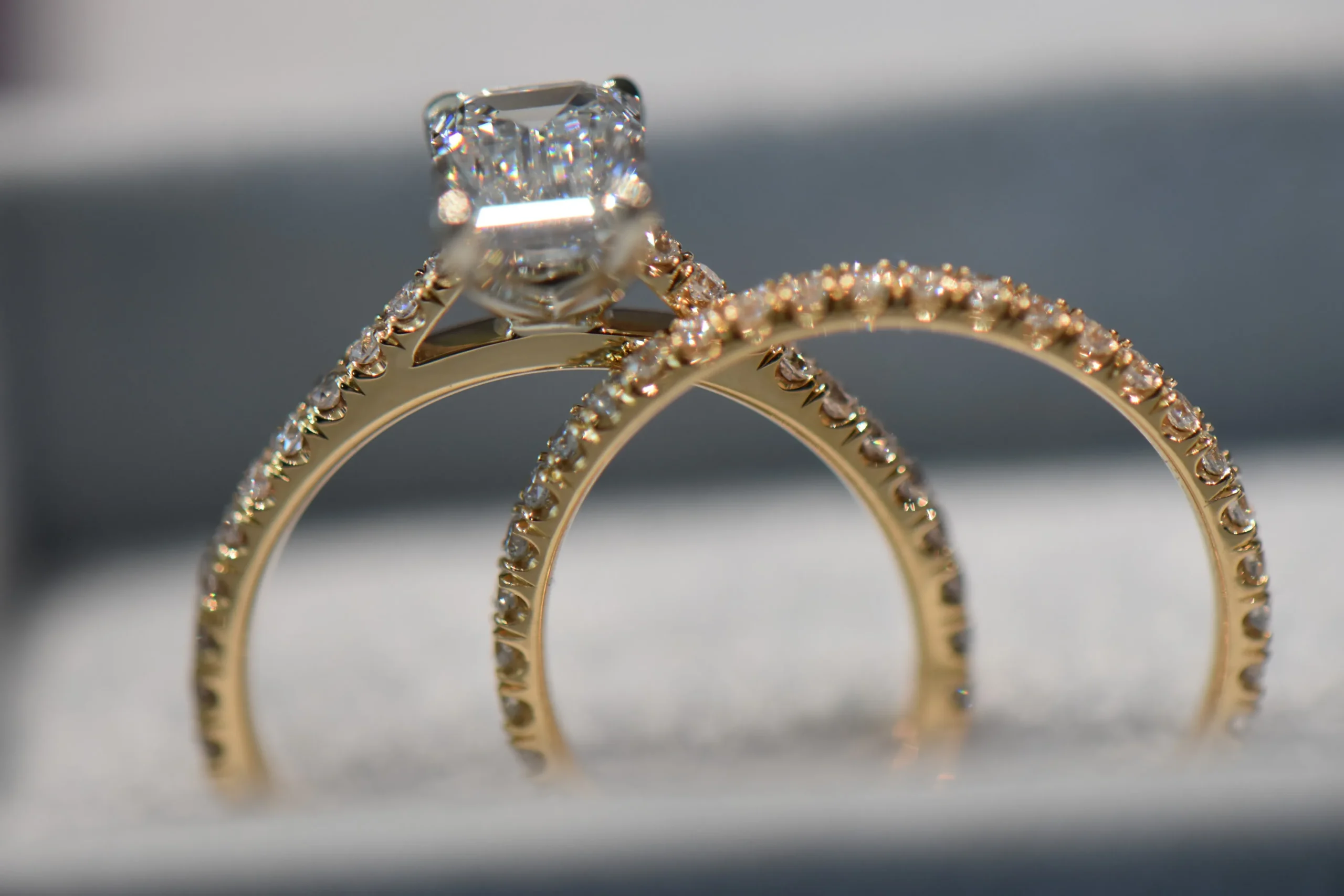
The centre diamond is often the starting point, but the setting determines how that diamond is experienced.
A skilled jeweller considers:
- the shape of the diamond,
- its proportions,
- its depth,
- its brilliance pattern,
- its vulnerabilities.
Different diamond shapes create different design challenges.
- An oval diamond behaves differently from a round brilliant.
- An emerald cut reveals different qualities from a cushion cut.
- A pear shape requires careful protection at its point.
The setting should respond to the stone—not force every stone into the same structure.
The Head: Where Security Meets Light
The head is the portion of the ring that holds the centre stone.
It is one of the most important areas of engineering.
A poorly designed head can:
- sit too high,
- feel unstable,
- collect dirt,
- reduce brilliance,
- make the ring uncomfortable.
A well-designed head balances three competing goals:
- Allowing light to interact with the diamond.
- Protecting the stone.
- Maintaining elegance.
These goals are always connected.
Removing metal may increase openness but reduce protection.
Adding metal may increase strength but reduce visual delicacy.
The craft lies in finding the correct balance.
Prongs: Small Details With a Major Responsibility
Prongs are among the smallest parts of an engagement ring, but they perform one of the most important functions.
They secure the diamond.
A prong must be:
- strong enough to protect the stone,
- refined enough not to distract from it,
- properly positioned to complement the diamond shape.
The number of prongs is not simply a style choice.
- A four-prong setting creates a different visual effect than a six-prong setting.
- A claw prong creates a different character than a rounded prong.
The choice depends on the stone, the design, and how the ring will be worn.
The Gallery: The Hidden Backbone
The gallery is the structure beneath the centre stone.
Many people never see it.
Yet it influences:
- strength,
- comfort,
- profile,
- cleaning,
- overall balance.
A thoughtfully designed gallery can make a ring feel lighter while actually improving its structural integrity.
This is one of the places where craftsmanship separates itself from appearance.
A ring may photograph beautifully from above, but the side profile reveals the maker’s understanding.
The Shank: The Foundation of the Ring
The shank is the band portion that circles the finger.
It carries the design and experiences constant contact.
Important considerations include:
Thickness
A shank that is too thin may lose strength over time.
A shank that is too heavy may overwhelm the design.
Shape
A rounded interior can improve comfort.
A carefully designed exterior can create elegance.
Taper
A tapered shank can draw attention toward the centre stone while maintaining structural support.
Every millimetre changes the character of the ring.
Shoulders: The Transition Between Band and Centre Stone
The shoulders connect the shank to the setting.
They influence:
- visual flow,
- stability,
- the relationship between the diamond and the band.
In a solitaire, the shoulders are especially important because there are fewer design elements to distract from proportion.
A small change in the shoulder angle can make a ring feel modern, classic, or vintage.
The Underside: Where Experts Look First
Many people examine a ring from the top.
A jeweller often looks underneath first.
Why?
Because hidden areas reveal decisions.
Look at:
- how smoothly metal transitions,
- whether surfaces are properly finished,
- whether the structure is intentional,
- whether there are unnecessary weaknesses.
Exceptional craftsmanship exists in places nobody photographs.
Designing for the Future
A ring should not only be beautiful on the day it is purchased.
It should be designed with the future in mind.
Questions an experienced jeweller considers:
- Can the ring be resized?
- Can stones be tightened or serviced?
- Will the setting withstand decades of wear?
- Will the design age gracefully?
- Can future generations maintain it?
The best designs are not disposable.
They are adaptable.
The Difference Between Decoration and Design
Decoration adds beauty.
Design creates purpose.
A gemstone placed into a setting is jewellery.
A gemstone supported by thoughtful engineering becomes an heirloom.
Every exceptional engagement ring contains decisions that most people will never notice.
That is the mark of great craftsmanship.
The goal is not for someone to see the engineering.
The goal is for them to feel the result:
- A ring that looks effortless.
- A ring that feels natural.
- A ring that lasts.
