
The smallest details often carry the greatest responsibility
When someone looks at a custom engagement ring, the eye naturally goes to the diamond.
The cut.
The brilliance.
The shape.
The way it reflects light.
Very few people notice the small pieces of metal holding that diamond in place.
Yet those small pieces—the prongs—are among the most important elements of the entire ring.
A prong has a difficult job:
It must protect one of the most valuable parts of the ring while becoming almost invisible.
That balance between security and beauty is where craftsmanship begins.
A Prong Is Not Just a Metal Claw
It is easy to think of a prong as simply a piece of metal bent over a diamond.
A well-designed prong is much more intentional.
A jeweller must consider:
the shape of the diamond,
the vulnerability of its edges,
the angle of light entering the stone,
the wearer’s lifestyle,
the overall design language of the ring.
The goal is not to add metal.
The goal is to place exactly the right amount of metal in exactly the right location.
Understanding the Diamond Before Designing the Setting
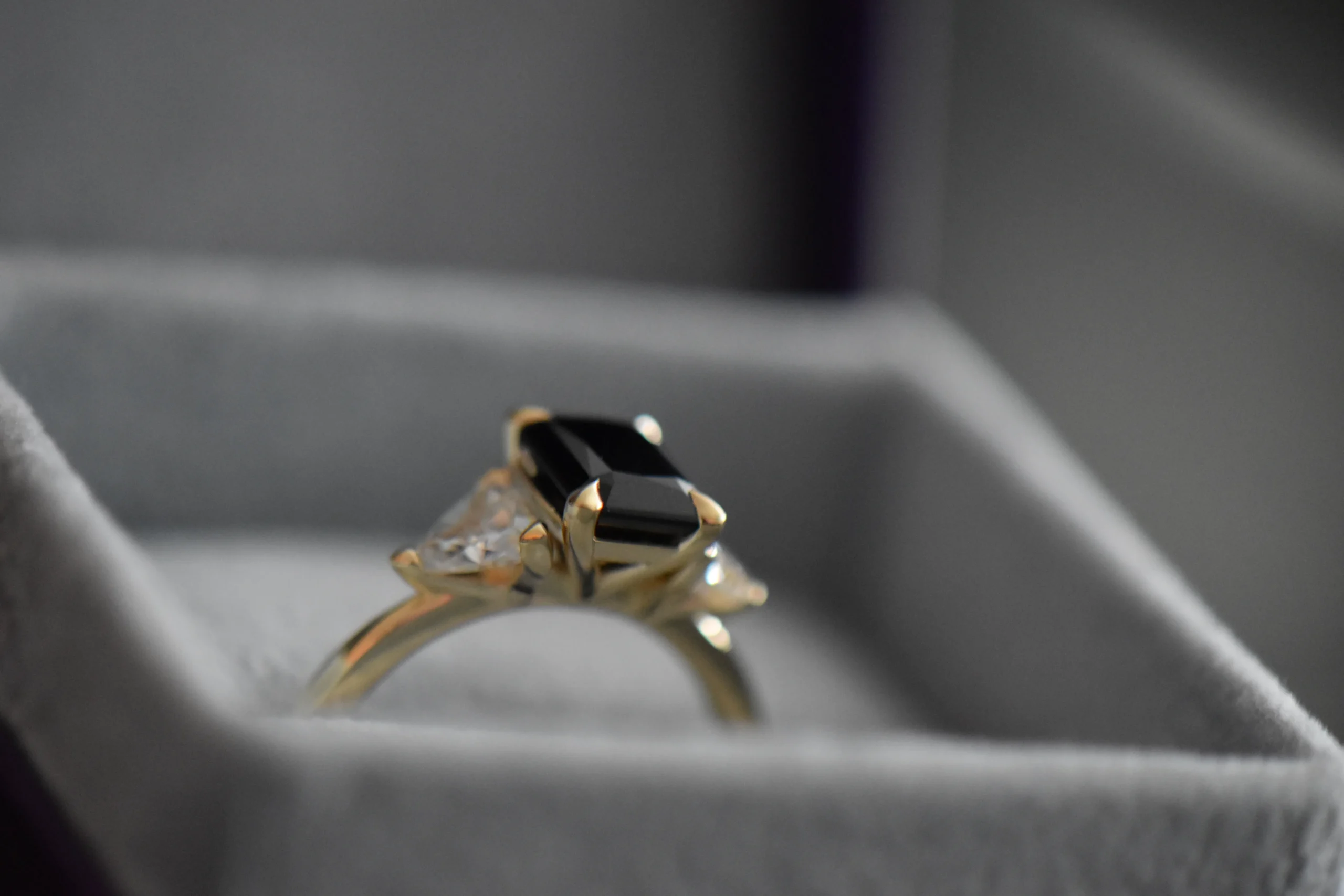
Every diamond has its own personality.
A round brilliant diamond has different structural needs than:
an oval,
an emerald cut,
a pear,
a marquise,
a cushion,
a radiant.
The shape determines where protection is most important.
For example:
Elongated shapes
Ovals, pears, and marquise diamonds have pointed or curved ends that require careful attention.
The tips can be more vulnerable to impact.
A skilled jeweller considers:
where the prongs sit,
how much protection is provided,
how the diamond remains visually open.
Step cuts
Emerald and Asscher cuts have broad, open facets.
Because the stone has a different visual character, the setting must allow the clean geometry of the diamond to remain the focus.
The setting should frame the stone—not compete with it.
Four Prongs vs. Six Prongs: There Is No Universal Answer
A common question is:
“Which is better, four prongs or six?”
The honest answer:
It depends.
Four-prong settings
Advantages:
More diamond visibility.
A lighter, more open appearance.
Often a more modern feel.
Considerations:
Each prong carries more responsibility.
Placement must be precise.
Six-prong settings
Advantages:
Additional points of security.
A classic, timeless appearance.
Can complement certain diamond shapes beautifully.
Considerations:
More metal is visible.
Placement becomes critical to avoid interrupting the diamond’s appearance.
The right choice depends on the stone and the design—not a universal rule.
The Shape of a Prong Changes the Character of a Ring
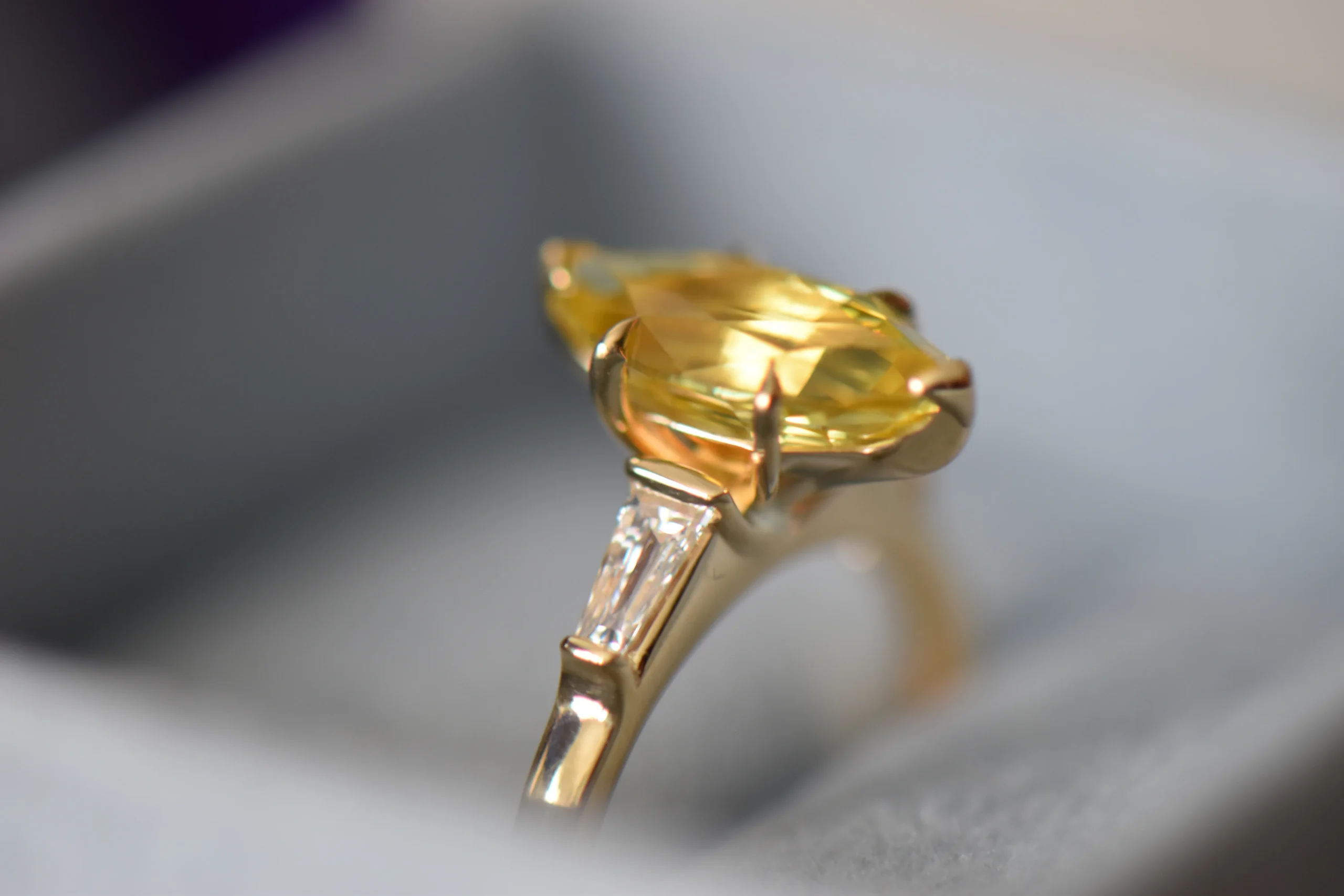
Prongs have personality.
Small changes create different impressions.
Claw Prongs
A claw prong tapers delicately toward the diamond.
Its purpose is to:
minimize visual interruption,
create elegance,
allow more of the diamond to be seen.
Because they are refined, they require careful workmanship.
The thinner the appearance, the more precise the construction must be.
Rounded Prongs
Rounded prongs provide a softer appearance.
They often suit:
classic designs,
vintage-inspired pieces,
clients who prefer a slightly more substantial look.
They can create a sense of strength and permanence.
Bezel Settings
A bezel surrounds the diamond with metal.
This provides excellent protection and creates a distinctive aesthetic.
The challenge is precision:
Too much metal can overpower the stone.
Too little can compromise security.
A well-made bezel appears effortless.
The Importance of Prong Placement
A common misconception is that prongs are placed only for security.
They also affect beauty.
A jeweller considers:
where the eye naturally travels,
how light enters the diamond,
how the stone appears from above,
how the ring looks in motion.
A poorly positioned prong can interrupt the shape of a diamond.
A thoughtfully placed prong can make the diamond appear larger and more graceful.
The Relationship Between Metal and Diamond
The choice of metal also affects prong performance.
Platinum
Platinum is valued because:
it is dense,
it is naturally white,
it is highly suitable for secure stone settings.
When platinum wears, it tends to move rather than disappear.
Gold
Gold allows beautiful colour choices:
yellow gold,
rose gold,
white gold.
Different alloys have different characteristics, and the design must account for them.
The best metal choice depends on:
design,
lifestyle,
desired appearance,
maintenance preferences.
The Setting Process: Where Precision Matters
A diamond setter works under magnification.
At this stage, patience is essential.
The setter must ensure:
the stone sits correctly,
pressure is evenly distributed,
the prongs are secure,
the finishing is clean.
A beautifully designed ring can be compromised by careless setting.
The setting is where design becomes permanence.
What Happens Over Time?
A ring is worn.
It encounters:
movement,
contact,
environmental factors,
everyday life.
A thoughtful jeweller considers future maintenance.
Questions include:
Can the prongs be inspected easily?
Can they be repaired if necessary?
Is the design strong enough for decades of wear?
A beautiful ring should not only survive the moment it is given.
It should survive the memories that follow.
The Difference Between Hiding a Diamond and Revealing It
The best prong work disappears.
Not because it is unimportant.
Because it has done its job perfectly.
A great setting does not compete with the diamond.
It creates the conditions for the diamond to be seen at its absolute best.
The craft of prong design is the pursuit of balance:
Enough strength to protect.
Enough refinement to disappear.
Enough precision to last a lifetime.
That is the quiet artistry behind every exceptional engagement ring.
provide meta title under 60 and above 50 chracters and desceription
