
Every exceptional ring begins with a conversation
A custom engagement ring is not created by starting with a blank piece of metal.
It begins with understanding.
Understanding the person.
Understanding the story.
Understanding the reason this particular ring needs to exist.
A photograph can show inspiration, but it cannot show intention.
The role of a master jeweller is to take an idea that exists emotionally and translate it into something physical—something that can be worn every day and eventually become part of a family’s history.
This is the journey from concept to heirloom.
The Beginning: Understanding the Vision
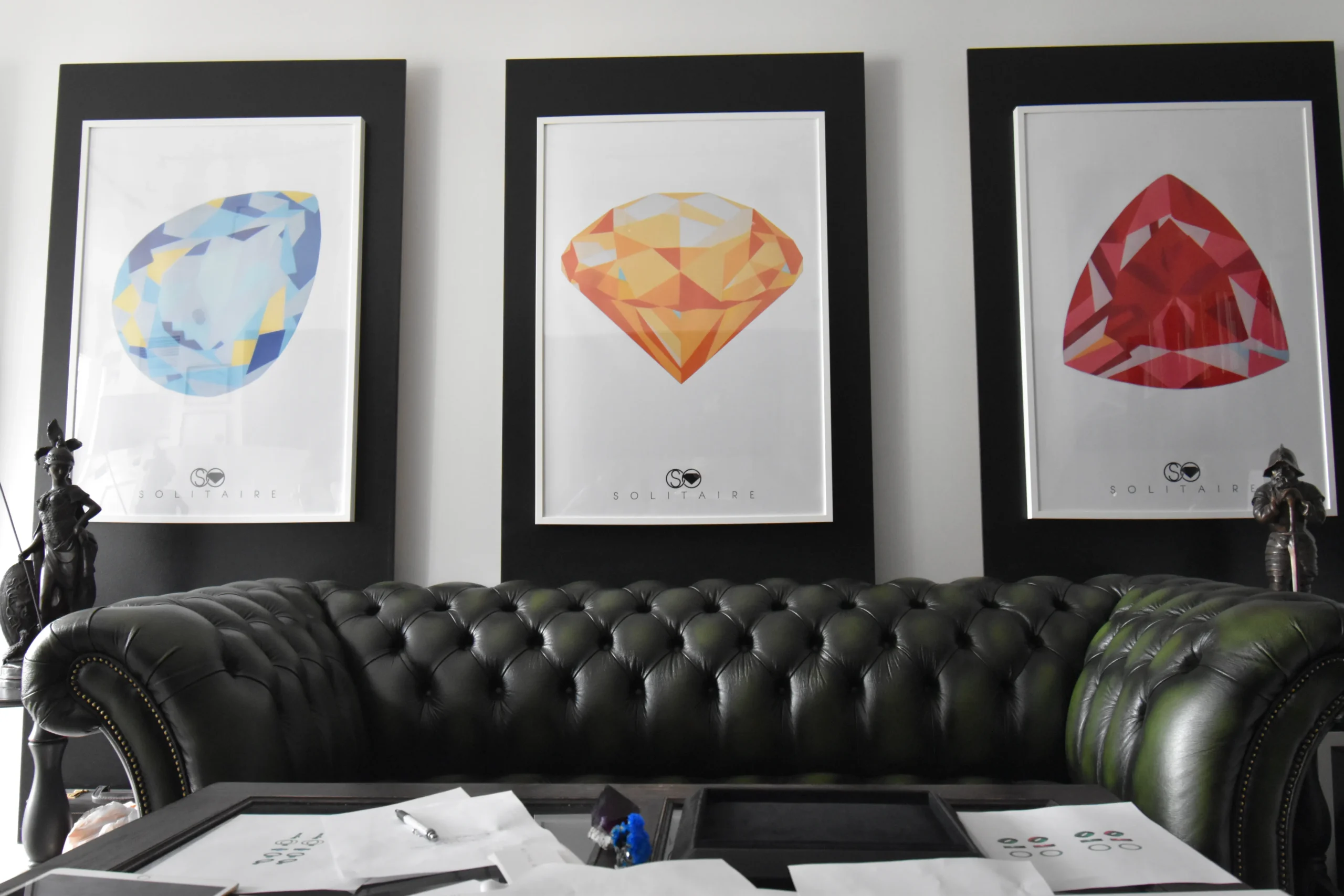
A client often arrives with a collection of ideas:
images saved from different sources,
family jewellery they admire,
a preferred diamond shape,
a feeling they want the ring to express.
The first step is not choosing a design.
It is identifying what matters most.
Is the priority:
maximum brilliance?
a timeless silhouette?
a vintage feeling?
a modern architectural look?
a delicate appearance?
a ring designed for everyday durability?
A successful custom piece is not a collection of individual features.
It is a unified idea.
The Design Challenge
Every custom ring presents a challenge.
The challenge is not simply:
“How do we make this beautiful?”
The challenge is:
“How do we make this beautiful while ensuring it works?”
For example:
A client may want a very delicate solitaire.
The visual goal:
thin,
elegant,
minimal.
The practical requirement:
strong enough for decades of wear.
The jeweller’s responsibility is finding the point where those two goals meet.
This is where experience matters.
Translating Emotion Into Form
A designer begins considering:
Proportion
How large should the centre stone appear relative to the band?
Balance
Where should the visual weight sit?
Height
How high should the diamond sit above the finger?
Movement
How does the ring flow when viewed from every angle?
A ring should never look like separate parts assembled together.
The stone, setting, and band should appear as one continuous design.
The First Sketch
The sketch is where possibilities become visible.
At this stage, ideas can be explored quickly.
A designer may consider:
different profiles,
different shoulder shapes,
variations in the setting,
subtle decorative elements,
alternative proportions.
The goal is not to create a final drawing immediately.
The goal is discovery.
A good sketch answers:
“What is the essence of this ring?”
Refining the Design
Once the direction is established, the design becomes more precise.
Questions become more technical:
How thick should the band be?
How will the diamond be supported?
How will the ring sit beside a wedding band?
Where should metal be removed?
Where must strength be added?
This stage is where artistry and engineering meet.
Bringing the Design Into Three Dimensions
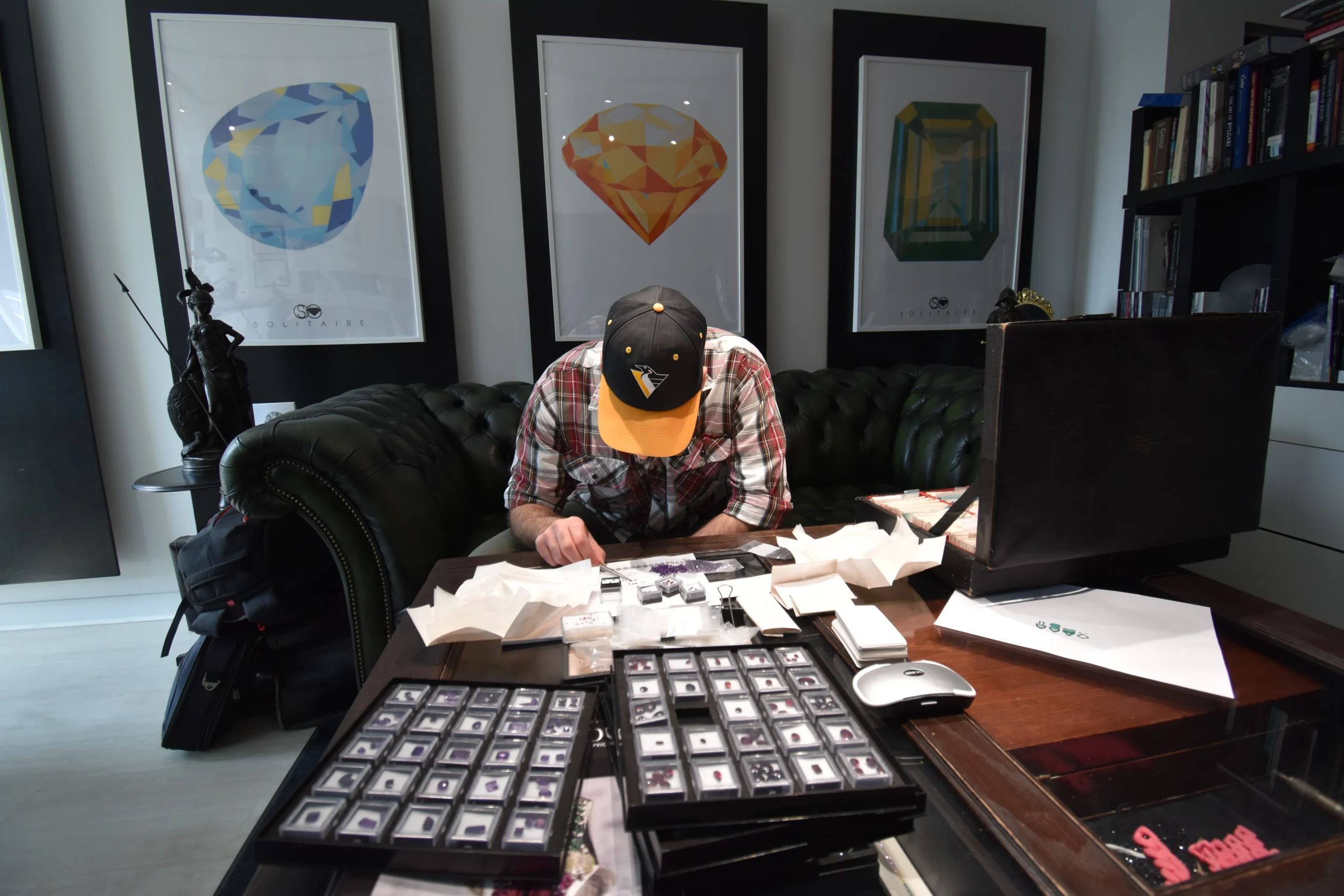
A two-dimensional drawing can suggest an idea.
A three-dimensional model reveals reality.
Depending on the design process, the ring may move through:
CAD design,
digital rendering,
physical prototype,
hand adjustments.
The purpose is not simply visualization.
It allows refinement before the final piece is created.
A client can understand:
scale,
height,
proportions,
details,
how the ring will appear from different angles.
The Making Process
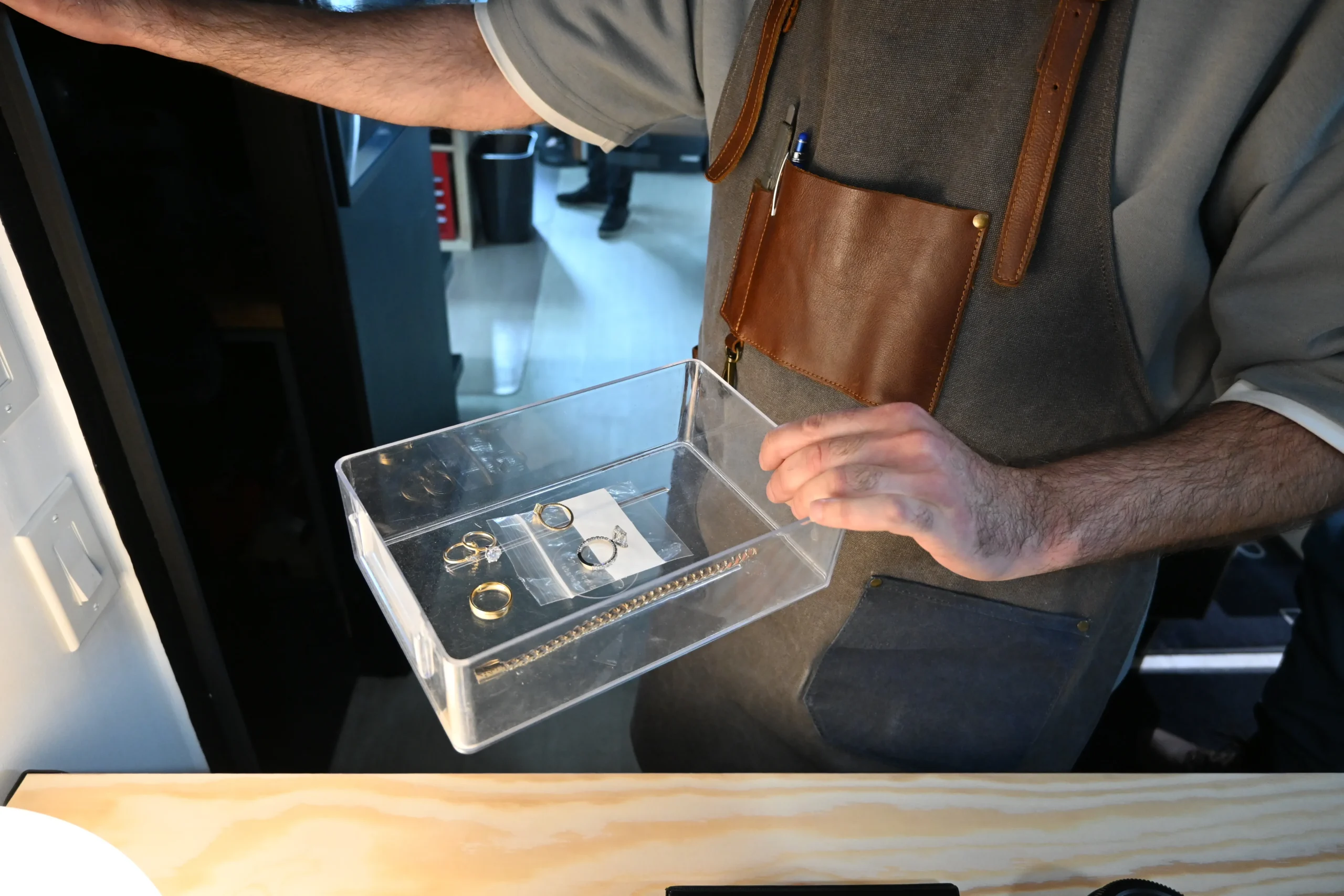
Once approved, craftsmanship begins.
The exact process depends on the design, but may involve:
Preparing the structure
The foundation must be correct before beauty can be added.
The ring must have:
proper balance,
correct dimensions,
appropriate support.
Refining the metal
Surfaces are carefully shaped and finished.
Small imperfections become obvious under magnification.
Preparing the setting
The area holding the gemstone must be precise.
The diamond should sit securely while appearing naturally integrated into the design.
Setting the Diamond
This is one of the most critical stages.
The setter must consider:
alignment,
symmetry,
security,
light performance.
The stone should appear effortless.
But effortlessness is usually the result of precision.
Finishing: Where Good Becomes Exceptional
The final finishing process transforms a ring.
Attention is given to:
surface quality,
polish,
transitions between elements,
edges,
comfort.
A ring should feel as refined as it looks.
When a person wears it, there should be no awareness of roughness, imbalance, or discomfort.
Quality Control: Seeing What Others Miss
Before completion, the ring is examined carefully.
A jeweller looks for:
symmetry,
stone security,
craftsmanship,
comfort,
finishing quality.
The question is not only:
“Does it look beautiful?”
The question is:
“Will it remain beautiful?”
The Finished Ring
The completed ring represents a collaboration.
Between:
the client’s story,
the designer’s interpretation,
the craftsperson’s skill,
the materials themselves.
A great custom ring does not simply reflect a moment.
It preserves it.
What Makes a Custom Ring Truly Personal?
Personalization is not adding more details.
It is making intentional choices.
A ring becomes personal when every decision has meaning:
The diamond shape chosen because it reflects a personality.
The setting chosen because it suits a lifestyle.
The details included because they belong to the story.
The details removed because they do not.
The Master Jeweller’s Perspective
A custom engagement ring is a responsibility.
The jeweller is not only making an object for today.
They are creating something that may be worn by someone they will never meet:
A future anniversary.
A future generation.
A future family member who asks:
“Who made this?”
The answer should always be found in the craftsmanship.
