
Some stories start with a ring. A re-engagement ring is one chapter in it. It is a second ring, given or chosen on an anniversary or other milestone, as a way of saying yes again, this time with years of life together behind it. It does not replace the first ring. It does not ask you to give up the first ring. It adds to the story. This guide will walk you through designing a re-engagement ring, from defining its purpose to making sure it works with the rings you already wear.
How to Create a Second Ring for a Milestone
1. Know What a Re-Engagement Ring Is
A re-engagement ring is a renewed proposal in the form of jewelry. Couples choose one for a milestone anniversary, a vow renewal, or another milestone, such as a long-awaited achievement or a new chapter. There’s no playbook for when. The 10th, 20th, and 25th years are popular, but people often pick a date that feels right. Ultimately, the ring should hold significance for you both.
2. Determine the Role of the Second Ring
Before you start looking at designs, decide what the new ring is for. The three most commonly mentioned roles are:
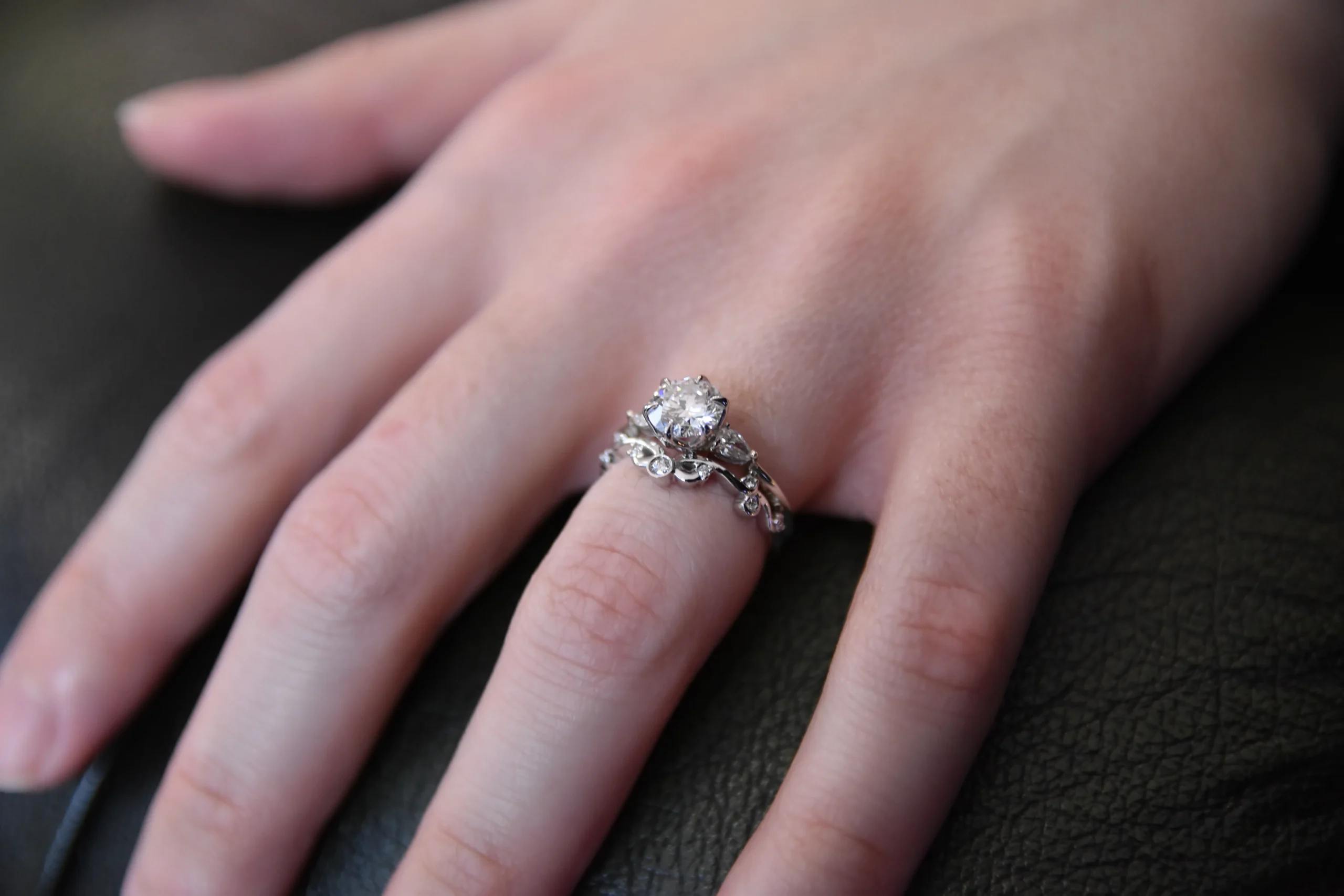
A companion. A band or enhancer worn next to or around the original ring, so the two are worn together and read as one stack.
One level up. A new ring to replace the original on the hand, perhaps with a larger center stone or different setting.
New announcement. A different ring worn on another finger to represent who you are now without disturbing the original.
Everything else is role-dependent—the size, the style, and how closely it has to match the rings you already wear.
3. Design Around the Rings You Already Have On
If the new ring will sit next to the original or wedding band, it needs to work with them. Take both rings to your first consultation, since you cannot tell how a new design will look next to an existing one from a sketch. Look at the width and profile, the height of the settings and how the curves meet, because a mismatch can create an awkward gap or cause rubbing between rings. You can match it to the metal for a cohesive look or contrast it for a deliberate modern feel. One of the biggest reasons to have a custom design is that you can tailor it to fit the existing rings perfectly.
4. Shape the Design Around the Milestone
A second ring can carry additional personal meaning. Some couples choose a stone for each year they’ve been together. Others opt for a three-stone design to represent the past, present and future, or include birthstones of children or family. A hidden detail, like a small gemstone set beneath the center stone or a date engraved inside the band, conveys a private meaning.
Anniversary gift traditions can also help with your decision, but be aware that lists vary by source. Popular combinations include diamond for the 10th, emerald for the 20th, silver for the 25th, pearl for the 30th, ruby for the 40th, sapphire for the 45th and gold for the 50th. Use them as a source of inspiration, not a rule.
5. Reflect on How You Live Now
You’re not the same person you were at your first proposal, and your ring can show that. Look at your day-to-day life: the manual labour you do, your activity level, and how often you plan to wear the ring. If you are active, you may be better off with a bezel or more protective setting, depending on your activities, and some metals are tougher than others. Finger and hand sizes change over the years, so have your jeweller check your current size, especially if you plan to stack rings.
6. Decide If You Want a Surprise or Want to Design Together
Some partners keep the design a surprise, working with what they know about the other person’s taste, current ring size, and the rings they already wear, since the gesture is part of the charm of a re-engagement ring. Others prefer to design together, making the process a shared experience rather than simply choosing an object. Either one will work. A shared process works well for those who want to make sure the result feels right. A surprise works well for those who know each other’s style well.
7. Create a Timeline and Budget
Designing and making a custom ring takes time, so don’t wait until the date you’re thinking of; allow time for fittings and alterations. When it comes to budgeting, you don’t have to do it all at once. Some people plan the changes in stages, with one companion band at one milestone and more at the next. Your jeweller can discuss the options in stones and metals and what each means in terms of cost, so you can decide where to spend and where to hold back.
8. Decide What Happens to the Original Ring
Getting a second ring doesn’t mean you put the first one away. Many people wear both together, or on different hands. Some have the original stone reset as a pendant or right-hand ring; others keep it safe for a future heirloom. If you have a new ring that adds considerable value, update its appraisal and your insurance coverage to include it.
Questions to Ask a Jeweller Before You Begin
Some questions to help you choose wisely.
- Did you ever do a milestone or anniversary piece? Ask for examples.
- How do you make the new ring fit with the ones I already wear? See if they will let you test the design alongside them.
- How do you source your stones, and how do you document them? Request certificates if applicable.
- What design previews or models do you provide, and what’s the timeline? Ask when you will see any sketches and a model before the ring is made.
- What is your warranty, return and repair policy? Know them before you get committed.
Mark Your Milestone With a Ring Made Just for You, Only at Solitaire x Alex Armen
A re-engagement ring works best when you have a clear idea of its purpose, ensure it sits comfortably with your existing rings, and choose details that carry personal meaning. The goal is a ring that feels like the next chapter of your story, whether that’s a companion band, an upgrade, or a new statement.
At Solitaire x Alex Armen, we take on anniversary and milestone pieces as part of our work. We design each custom commission one-on-one. We have been doing expert repairs since 1983, and our experience working with existing jewellery helps us understand how to make a new ring work with the ones you have. Each ring is one of a kind, rather than an off-the-shelf design; we make each piece especially for you. Our return and refund policy is clear so you can start with confidence. Contact us to discuss your milestone, and we would love to help you design a second ring to tell the next part of your story.
Frequently Asked Questions About Re-Engagement Rings
What Is a Re-Engagement Ring?
A re-engagement ring is a second ring picked or given at an anniversary or milestone, as a re-proposal. It complements the original ring instead of replacing it, and you can wear it with the first ring, in place of it, or on another hand.
What Year Do You Upgrade Your Wedding Ring?
There is no set year. The 10th, 20th, and 25th years are popular, but many people choose a date with special significance, such as a vow renewal or personal milestone.
Can I Wear My Original Ring With My Re-Engagement Ring?
Yes. We can design a custom ring to sit next to your original ring and wedding band, so they stack well. Bring in your current rings to check the fit.
How Do I Make a New Ring Match My Wedding Band?
Bring your wedding band to your consultation so we can compare the width, profile, setting height, and metal. We can design the new ring as an enhancer that surrounds the original ring, or shape it to sit comfortably alongside the band.
