
The metal is not just the frame—it is part of the design
When choosing an engagement ring, most people begin with the diamond.
The shape.
The size.
The brilliance.
But the metal surrounding that diamond influences the entire character of the piece.
Metal determines:
how the diamond appears,
how the ring feels,
how it wears over time,
how it ages,
how it can be repaired and maintained.
There is no single “best” metal.
There is only the metal that best supports the design, the stone, and the person who will wear it.
A master jeweller does not begin with a preference.
They begin with a question:
What does this ring need to become?
Understanding the Role of Metal
A ring is a relationship between three elements:
The gemstone
The design
The metal
The metal must support the stone while contributing to the overall aesthetic.
A diamond placed in platinum will communicate differently than the same diamond placed in yellow gold.
The stone has not changed.
The experience has.
Platinum: The Metal of Permanence
Platinum has long been associated with fine jewellery because of its unique characteristics.
It is:
naturally white,
dense,
durable,
naturally hypoallergenic for many wearers.
Its colour allows diamonds to appear bright and uninterrupted, especially when paired with colourless or near-colourless stones.
But platinum’s appeal goes beyond appearance.
It has a distinctive relationship with wear.
How Platinum Ages
All precious metals change over time.
The question is not whether a metal changes.
The question is how.
When platinum is worn, it tends to move rather than disappear.
Small marks can create a soft surface texture often referred to as a patina.
Some collectors appreciate this because it records the life of the piece.
A platinum ring worn for decades carries evidence of its history.
Platinum in Ring Construction
Platinum is particularly valued in certain custom engagement ring designs because of its density.
For settings that require strength and precision, platinum can be an excellent choice.
Examples include:
delicate solitaire settings,
intricate pavé work,
heirloom designs,
pieces where long-term stone security is a priority.
However, platinum is not automatically the right choice for every design.
A thoughtful jeweller considers the entire piece.
Gold: A Metal With History and Character
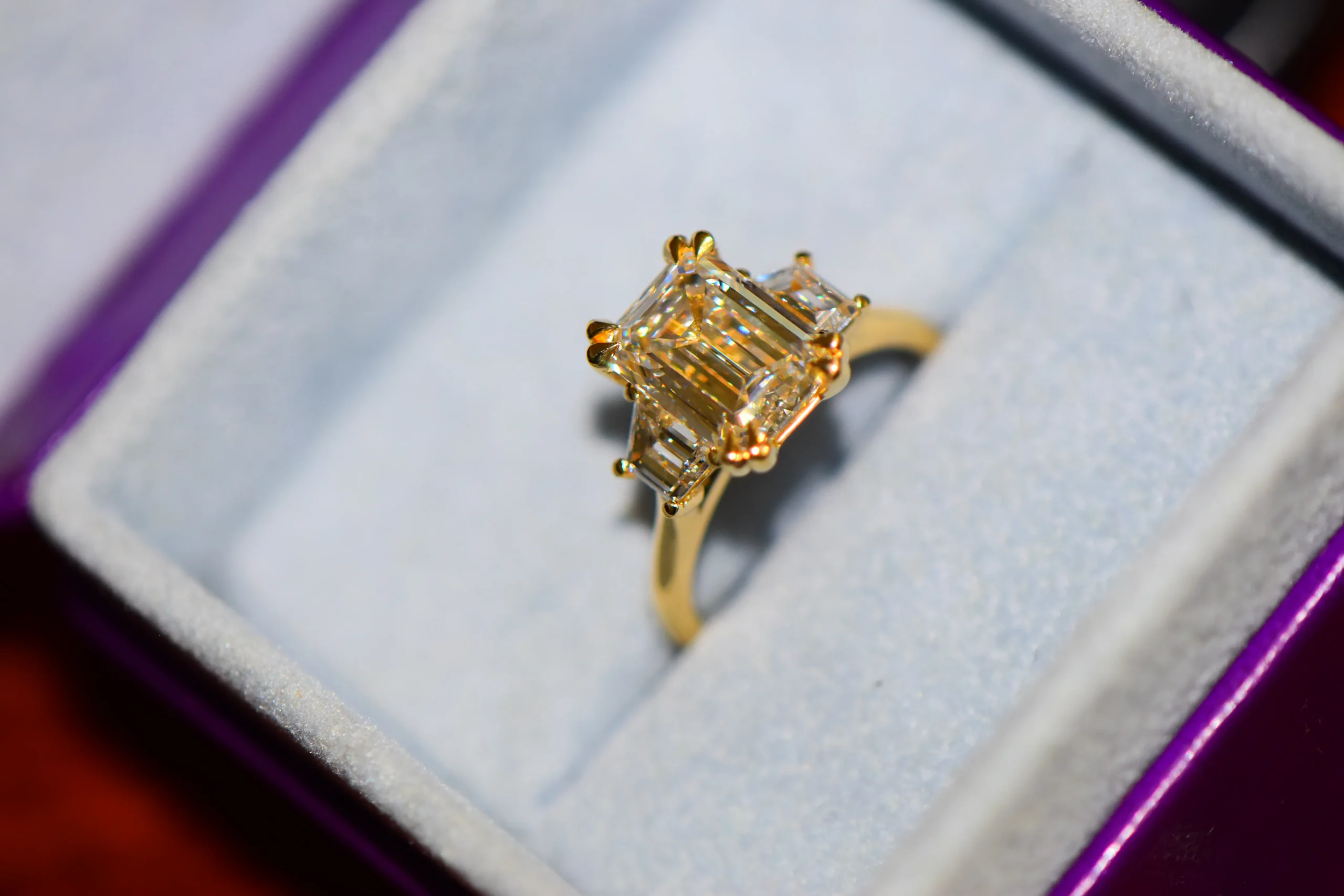
Gold has been treasured for thousands of years.
Its appeal comes from its:
warmth,
versatility,
colour options,
timeless association with jewellery.
Gold allows designers to create different moods.
Yellow Gold
Yellow gold has a natural warmth that creates a classic and traditional appearance.
It can provide beautiful contrast against diamonds and coloured gemstones.
It is often chosen by those who appreciate:
heritage,
warmth,
vintage inspiration,
timeless elegance.
Rose Gold
Rose gold introduces a softer, romantic character.
Its colour comes from the addition of copper to the alloy.
It can create a distinctive look that feels:
contemporary,
feminine,
artistic.
White Gold
White gold provides a bright appearance similar to platinum.
However, white gold is typically an alloy of gold mixed with other metals, and many white gold pieces receive a rhodium finish to achieve their bright white surface. At Solitaire, we do not rhodium plate because we use high-quality alloys in our white gold mixture.
Over time, regular white gold requires maintenance depending on the alloy and finish.
The Importance of Alloy
Pure gold is naturally soft.
For jewellery, gold is typically combined with other metals to create an alloy.
Common examples include:
18 karat gold,
14 karat gold.
The alloy affects:
hardness,
colour,
durability,
wear characteristics.
A skilled jeweller considers not only the colour a client wants, but how the metal will perform in the finished design.
Choosing Metal Based on Lifestyle
A metal choice should reflect how the ring will be worn.
Questions worth considering:
Will the ring be worn every day?
Daily wear requires thoughtful consideration of durability and maintenance.
Is the wearer active?
Lifestyle may influence the ideal design and metal choice.
Is the goal a modern or vintage aesthetic?
The metal contributes strongly to the emotional character of the ring.
Will the ring become an heirloom?
Long-term maintenance and restoration should be considered.
Metal and Diamond Colour
Metal choice can influence how a diamond appears.
For example:
Platinum and white metals can create a bright, seamless appearance.
Yellow gold can provide warmth and contrast.
Rose gold can create a softer overall impression.
A skilled jeweller looks at the relationship between:
diamond colour,
metal colour,
setting style.
The goal is harmony.
The Misconception: More Expensive Does Not Always Mean Better
One of the most common mistakes in jewellery is assuming that the most expensive option is automatically the best.
Craftsmanship is not about choosing the most expensive material.
It is about choosing the correct material.
A beautifully designed gold ring may be more appropriate than a platinum ring.
A platinum ring may be the ideal choice for another design.
The decision should come from understanding—not assumption.
The Jeweller’s Responsibility
A good jeweller does not simply ask:
“Which metal would you like?”
They ask:
How will you wear this ring?
What feeling should it create?
How should it age?
What role should it play in your life?
The metal becomes part of the story.
The Final Choice
Platinum and gold have both earned their place in fine jewellery.
Neither replaces the other. If you ask us, we suggest gold.
The right choice depends on:
the design,
the diamond,
the wearer,
the intended future of the piece.
The finest engagement rings are not created by following rules.
They are created by understanding materials deeply enough to make the right decision.
Because a truly exceptional ring is not just made to look beautiful on the day it is given.
It is made to become more meaningful with every year it is worn.
