Exclusive Offer: Complimentary certified lab-grown diamond (up to 2.50 carats) with your custom 18K ring by Alex.

By appointment – Limited number of commissions monthly

Engagement Rings in Toronto, Designed as Personal Commissions

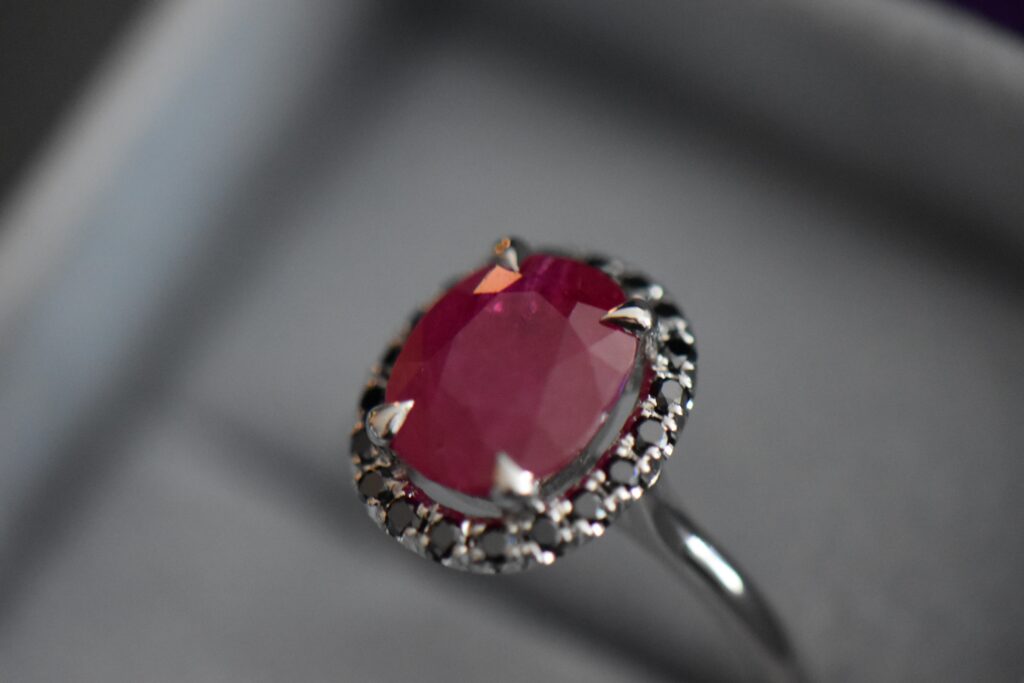
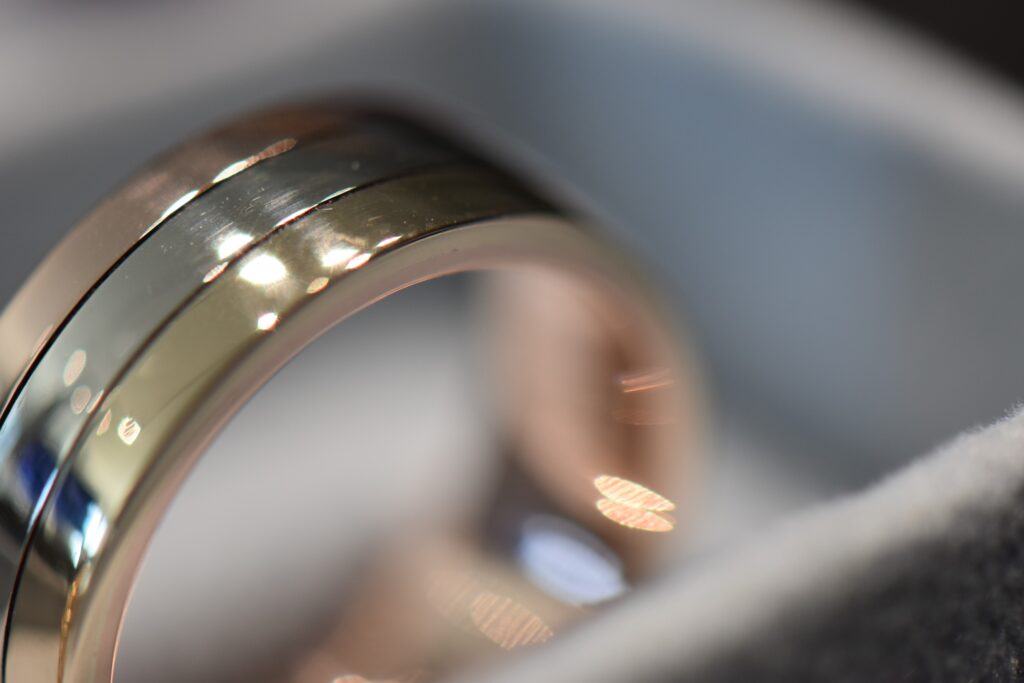
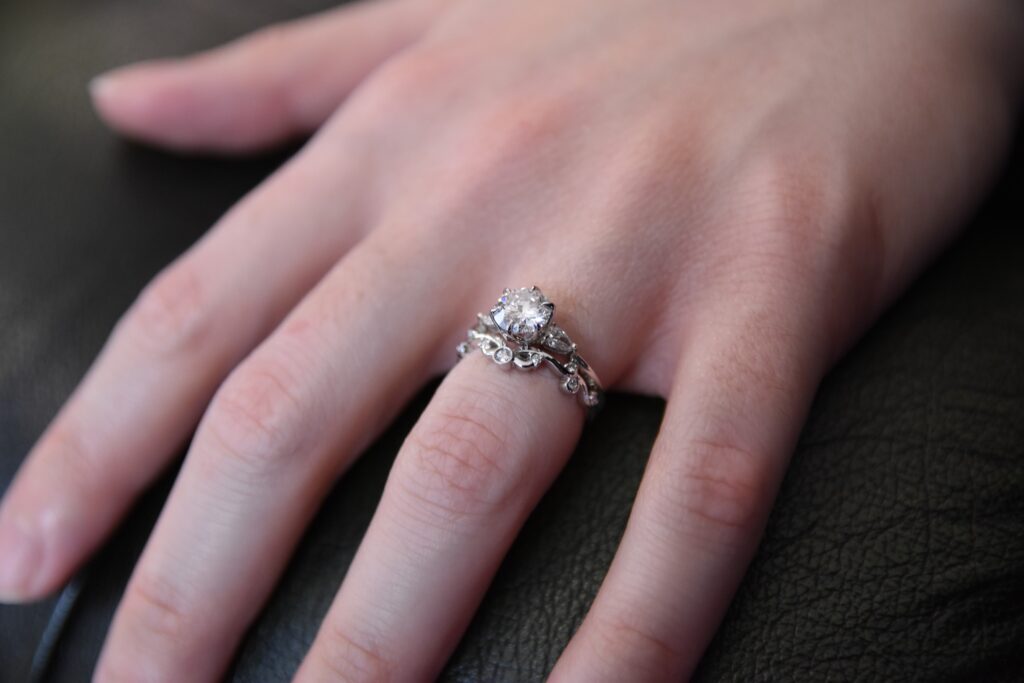
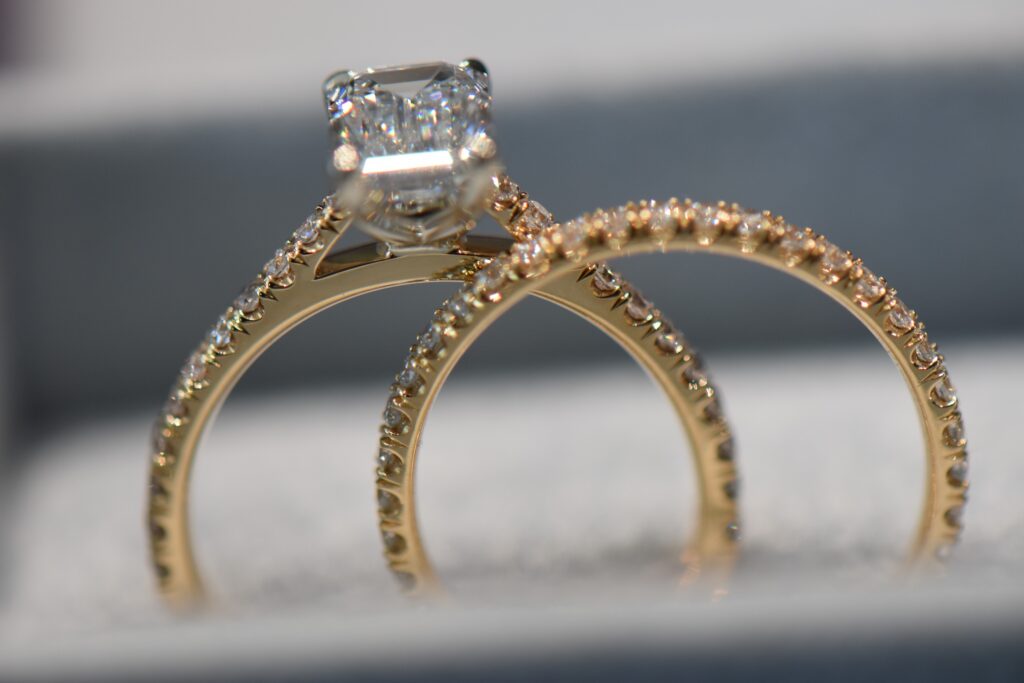
Each engagement ring in Toronto is individually designed by artist Alex Armen, guided by your story, lifestyle, and long‑term vision.

Not a Collection. A Commission.

The process is intentional, calm, and never rushed.

Every engagement ring in Toronto begins from a blank page and is designed one‑on‑one to reflect a relationship, not a trend.

The goal is not novelty, but something that feels right now—and years from now.

Created for a Lifetime of Wear

An engagement ring is worn every day, often without thinking. Its success lies not only in beauty, but in proportion, comfort, durability, and balance.

That reality shapes every design decision we make:

How the ring will be worn daily

Long‑term wear and maintenance

Hand shape, scale, and movement

Structural integrity and setting security

This is jewellery designed to age well — visually and physically.

Diamond & Gemstone Selection

Stones are selected for character, not checklists.We source natural and lab‑grown diamonds, as well as rare coloured gemstones, for Torontonians and their fine, custom engagement ring, chosen for:

Cut quality and light performance

Natural beauty and individuality

Structural suitability for long‑term wear

Clients are guided through selection privately, with clarity and discretion — never pressure.

Jewellery Engineering

Where precision meets artistry, explore the hidden craftsmanship, structural expertise, and technical details that make every ring beautiful, secure, and built to last for generations.

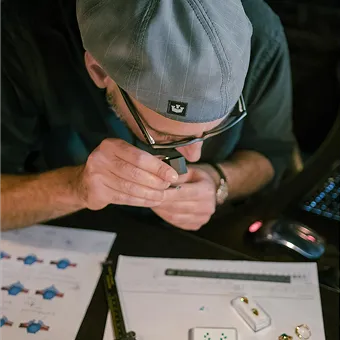
Inside Our Workshop

The Process

Direct access to the designer

Diamond sourcing expertise

Heirloom redesigns

Made in Toronto

Appointment-only experience

THE ULTIMATE GUIDE TO BUYING YOUR DIAMOND

There are a thousand and one sites and vids about this subject. I have read and viewed many, as you may have also in preparation for purchasing your diamond.  
Maybe a mined or lab-made diamond for an engagement ring, or for a custom piece for yourself.  

Inside Our Workshop

Meet the Craftspeople

Platinum vs. Gold for Engagement Rings: Jeweller’s Guide

Our Process

The Design Process

As a private engagement ring studio in Toronto, each design stage is deliberate, focused, and personal.

Private Consultation

A one‑on‑one conversation with Alex Armen to understand your partner, their preferences and intent.

Design Development

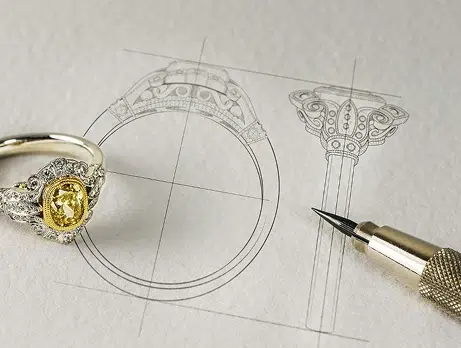
Concept sketches and design direction are refined collaboratively, with careful attention to proportion and detail.

Creation & Delivery

Your ring is crafted using time‑honoured techniques and exceptional materials, then finished, set, and delivered with care.

Private Consultation

A one‑on‑one conversation with Alex Armen to understand your partner, their preferences, and what matters most to you both.

Design Development

Concept sketches and design direction are refined collaboratively, with careful attention to proportion and detail.

Creation & Delivery

Your ring is crafted using time‑honoured techniques and exceptional materials, then finished, set, and delivered with care.

A Deliberate Timeline

Our engagement ring design in Toronto is never rushed.

Each commission is scheduled to ensure proper focus and attention, balancing efficiency with craftsmanship.


We accept a limited number of engagement projects at a time.

By Referral & Appointment

Our engagement ring work is primarily referral‑based.
Clients come to us seeking discretion, originality, and a process that feels calm and considered.


If this approach resonates, we invite you to request a private consultation for engagement rings in Toronto.

A Craftsmanship Knowledge Library

JOIN OUR SOCIAL

FOLLOW US ON INSTAGRAM

CLIENT ASSISSTANCE

 Solitaire x Alex Armen operates as a private, appointment-only commission studio. Artist Alex Armen personally designs every engagement ring in Toronto in a focused, one-on-one process that begins with a genuine conversation about your partner, your story, and your long-term vision. The studio accepts a limited number of commissions at any given time, which means each client receives dedicated attention from start to finish. With over four decades of experience, a referral-based clientele, and 432+ five-star reviews, Solitaire has earned its reputation as one of the best engagement ring stores in Toronto for those who want something truly singular.

Solitaire does not work from preset designs or catalogue selections. Every custom engagement ring in Toronto begins from a blank page and is designed specifically around the individual’s lifestyle, preferences, hand shape, and how the ring will be worn daily. Whether the result is understated or architectural, classic or unconventional, nothing is repeated. This is precisely what separates Solitaire from conventional engagement ring stores in Toronto.

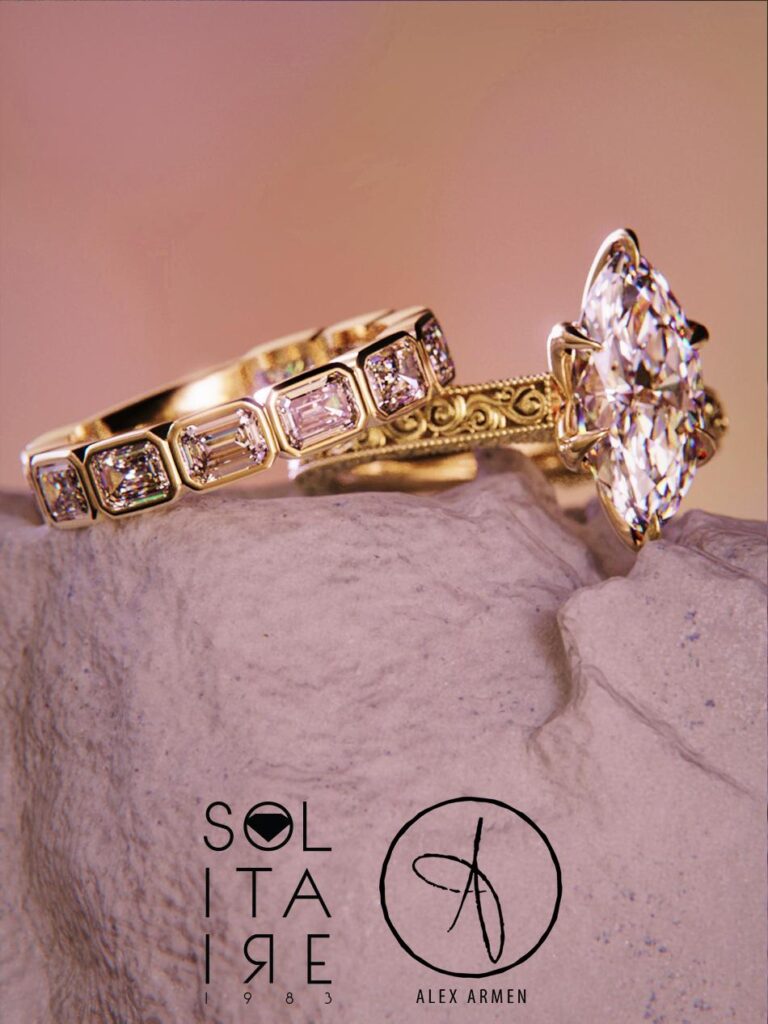
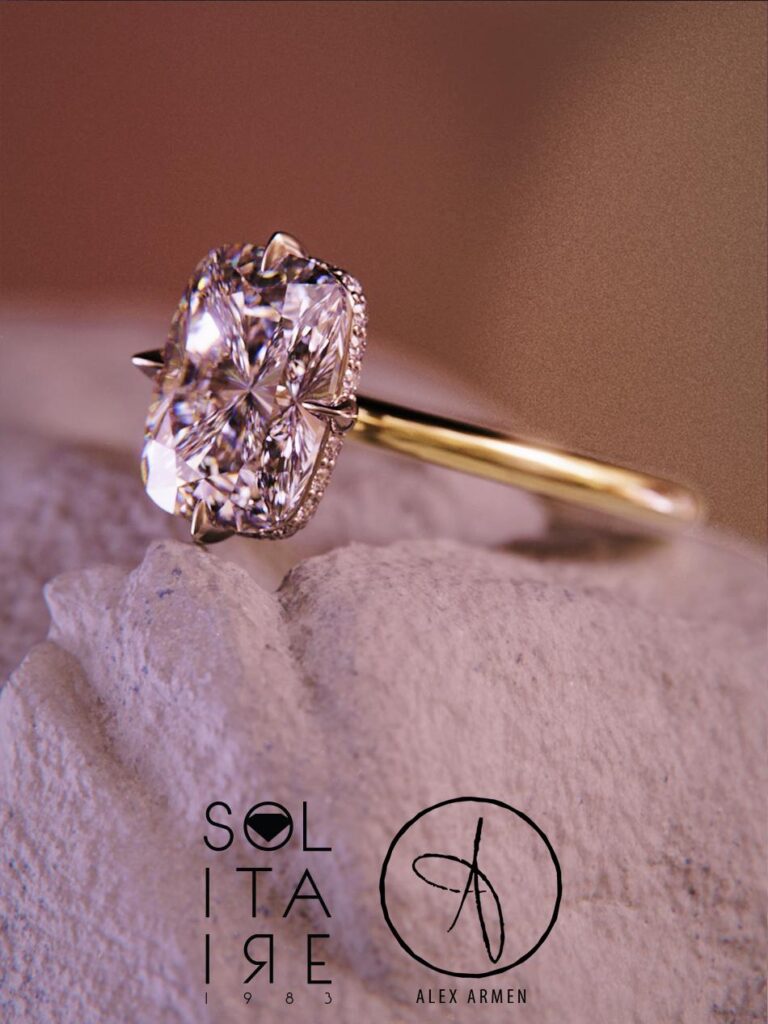
Alex Armen has designed solitaires, hidden halos, three-stone rings, vintage-inspired settings, cluster styles, bezel settings, split shanks, filigree designs, pave bands, and nature-inspired or geometric pieces, among many others. For clients seeking alternative engagement rings in Toronto, Solitaire is equally well-suited. Because every commission starts from scratch, the design is guided by your vision.

Solitaire sources both natural and lab-grown diamonds, and Arbi guides clients through the selection privately, with clarity and without pressure. Natural diamonds are GIA-graded, formed over millions of years, and generally hold their value better over time. Lab-grown diamonds are physically and chemically identical, graded equally by the GIA and IGI, and offer a more accessible price point. Both options can produce exceptional diamond engagement rings in Toronto when selected with care and set with skilled hands.

Timelines vary depending on the complexity of the commission and the studio’s current schedule, since Solitaire accepts a limited number of projects at a time. One client noted their ring was ready within a month of the first meeting. The studio’s process is deliberately paced, balancing efficiency with the attention each piece deserves. If you have a proposal date in mind, it is best to reach out early to allow for proper scheduling.

Solitaire x Alex Armen works with clients who arrive with reference images, hand sketches, AI-generated visuals, or custom 3D files. These are treated as starting points. We refine and re-engineer these designs through Alex’s design process rather than replicating them directly. This makes the studio a strong match for anyone looking for engagement ring design in Toronto with a concept already in mind. The consultation is where that concept meets craft.

THE ULTIMATE GUIDE TO BUYING YOUR DIAMOND

There are a thousand and one sites and vids about this subject. I have read and viewed many, as you may have also in preparation for purchasing your diamond.  

Maybe a mined or lab-made diamond for an engagement ring, or for a custom piece for yourself.  

You may notice only a hand-full of posts online that stick out because of their pertinent content. 

The rest share a similar theme of subjective, emotional narratives, along with links to their diamond inventories.  

For example, a site may state that the appearance of a diamond is affected by the colour of gold of the engagement ring. This is not only incorrect, but unfair to someone considering a yellow gold ring. More on a diamonds colour grade further below. 

Well, this post and accompanying video are about the facts and insights based on the mastery of diamond identification.  

I am a diamond and gemstone professional at Solitaire x Alex Armen, a fine jewellery design studio in Toronto. We do not carry diamond inventory. Why this is important will be discussed below. 

At Solitaire, we have been collaborating with clients since 1983. There is a lot of information and experience to share, but only the most relevant points will be discussed. These include topics that will help you when searching for your diamond. 

Here we go. 

1. Diamond grade vs diamond performance. Most buyers still believe better grade = better diamond. A G VVS1 Excellent can easily look worse than an H VS2 Excellent. 

In reality, a diamond grading report is a description of a diamond’s characteristics. It is not a beauty score. 

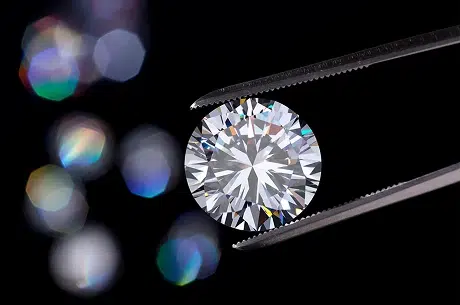
Two diamonds with identical colour, clarity and cut grades can have dramatically different appearances when viewed side by side. 

One may appear bright, lively and full of fire, while the other may look darker, less vibrant, or slightly hazy. 

When assessing a diamond, we place significant emphasis on its face-up appearance, including: 

  • Brightness 
  • Fire 
  • Scintillation 
  • Contrast pattern 
  • Transparency 

These characteristics ultimately determine what the eye sees. 

A grading report helps narrow the search, but it does not determine whether a diamond is exceptional. 

2. Understanding the bow-tie effect. When viewing an oval, pear or marquise diamond, you may notice a dark area running across the centre of the stone. 

A bow-tie is not: 

  • A clarity issue 
  • A colour issue 
  • A polish issue 
  • A symmetry issue 

It is primarily a light performance characteristic. 

Some bow-tie effect is normal in elongated diamond shapes and often unavoidable. 

The question is not whether a bow-tie exists. 

The question is whether it is attractive and balanced or dark and distracting. 

A severe bow-tie can reduce brightness and create a noticeably darker centre. 

When evaluating oval, pear and marquise diamonds, we carefully examine videos and images to determine whether the bow-tie is acceptable. 

A grading report alone cannot provide this information. 

3. Shape-specific proportions matter. Different diamond shapes require different combinations of depth, table size and angles. 

For example, an excellent set of proportions for an oval diamond could perform poorly in an elongated cushion. 

Below are some general ranges we use as a starting point. 

Oval Diamonds 

Preferred: 

Table: 56% to 60% 

Depth: 60% to 63% 

Length-to-width ratio: 1.40 to 1.50 

These proportions often provide strong brilliance, excellent spread and reduced bow-tie appearance. 

Elongated Cushion Diamonds 

Preferred: 

Table: 58% to 63% 

Depth: 64% to 68% 

Length-to-width ratio: 1.15 to 1.25 

In addition to proportions, facet pattern is particularly important in elongated cushions. 

Emerald Cut Diamonds 

Preferred: 

Table: 60% to 65.5% 

Depth: 62% to 69% 

These proportions often provide a balance between brightness and face-up size. 

Every diamond should be evaluated individually, but understanding proportion ranges can dramatically improve the quality of the search. 

4. The diamond industry has changed in favour of the customer. You can compare stones and prices using a myriad of sites.  

Many of the larger sites piggy-back off thousands of small to large diamond wholesalers’ inventories. When you filter and search, the results are displaying diamonds from different suppliers.  

This along with other supply-chain and economic factors generally offer you lower prices.  

Having said that, I would still purchase my diamond from a local and reputable jeweller. For example, after researching online, you would take your knowledge and questions to Solitaire to discuss options. 

Why? Because as a design studio Solitaire does not try to sell you a diamond from stock. As mentioned previously, Solitaire does not carry any.  

Instead, we listen to your requirements and then do our own research using our trusted wholesalers to provide you with a short-list of diamonds. 

Our guidance and unbiased diamond selection are a value-added service for a client. Pricing will be very similar to any large online retailer, and all questions will be professionally answered. 

In other words, if I was going to spend thousands of dollars, I would want to do it through a professional and in-person (or virtually). I would not care about marketing magic like returns and upgrades. 

No, I would rather have confidence in my purchase knowing that my purchase will absolutely delight the person I am going to give it to. Not having to experience a situation when my partner is dissatisfied, or I have to sort out paperwork and delivery for a return and deal with waiting. 

Can you imagine? I surely cannot. This is not some small or unimportant item from Amazon. Why would anyone treat a purchase of a diamond or jewellery, for that matter, as such? 

5. The ring or jewellery that will secure your diamond is as or more important than the diamond. Don’t believe me? Ask your partner.  

The statement I am making is based on encounters with clients over many years. There may have been a time where the diamond was everything, but not anymore. 

For an engagement ring, the design, proportions, claws, designer, and precise colour of gold are often the priorities. This is a reason many clients seek out a reputable custom jeweller. 

With Solitaire, you will collaborate directly with artist and designer Alex Armen.  

A layer of complexity added to the search of your diamond is finding a true custom jeweller. One where the most important elements of creating your piece is handled by the studio rather than outsourced. 

6. Time to get excited about this experience.  

Some men come to us and share that they are green to jewellery and diamonds. This is totally reasonable.  

Other guys have done minimal research, and a few will exhibit an attitude that says “I have to go through this process”. 

Trust me when I say that having fun and truly being invested in the experience will help you find your diamond, and more importantly, enhance your special moment with your partner.  

You will learn a lot about this special gem, including how it is graded. Insight into the desirability of a diamond and its meaning as part of jewellery will aid your perspective on an experience that is shared by millions of people. 

Did you know diamond trading began in India in the 4th century BC? And before DeBeers and the diamond rush in South Africa in the 1860’s that mining for these gemstones occurred in Brazil and India? And that DeBeers was named after farm? 

One of many other exciting facets of diamonds is that you can compare mined diamonds to laboratory-made diamonds, giving you more options. 

The first three points above are admittedly not technical but nevertheless critical when you are searching for your ideal diamond. The following are the technical aspects of a diamond. 

7. The facts about size are this: 1.00ct to 1.25ct for rounds are most common, and fancy shapes like ovals and emerald cut look best above 1.25ct. 

Also, carat is a weight and a 1.00ct that is poorly cut will look smaller than a 1ct that is cut well. More about the cut of a diamond later.  

The size of your diamond will affect your cost. You know your partner best (or you if buying for yourself) so if she says she prefers a larger diamond that usually translates to a 1.50ct to 2.00ct diamond. 

If she is more subtle with her style in general, 0.75ct to 1.00ct would be appropriate.  

These days, trying to find a 0.99ct or 1.49ct to save on price versus landing on magic numbers like a 1.00ct or 1.50ct is immaterial. It will likely prolong your search. 

If you are purchasing a diamond for your engagement ring, and it is a total surprise, you cannot go wrong with a 1.25ct to 1.50ct diamond. Generally, a 2.00ct or up will look large on an average finger size. 

8. Cut is important to the brilliance of your diamond, but not everything about the cut is critical.  

For example, a very good grading on symmetry or polish means slight imperfections which would not affect the brilliance noticeably. In other words, they are not primary determining factors. 

The proportions of the diamond are very important. This includes the angles, depth, table size and length-to-width ratio. 

The elements that influence the cut determine the appearance of:

a. Brightness – the diamond is bright including the table and edges 

b. Scintillation – the contrast of bright and dark areas with an even pattern, and no gray 

c. Fire – how much and how many rainbow colours appear 

These characteristics are determined by the proportions of the diamond, like the pavilion angles, girdle facets, the steepness of the crown and the size of the table. 

Next, there is a sweet spot within the Excellent grading range, called Ideal in the trade. This means that when a diamond professional is assessing the cut, the angles and proportions are just that, ideal. This means maximum brilliance and scintillation.  

For example, on an emerald cut (a fancy cut), an excellent cut grade means a table percentage of 57% to 72%, and an ideal range would be 60% to 65.5%. 

When a client collaborates with Solitaire, we provide a full assessment on a particular diamond that we are suggesting. For rounds and fancy cuts, this includes an analysis of all cut variables including the impacts on brightness, scintillation and fire, and an extensive examination of the finish of the diamond and the clarity factors. 

9. Clarity is critical mostly for the person who fancies clarity as important. There are five factors that we look for to determine clarity:

a. The size of the inclusions (large affects clarity more) 

b. The number of inclusions 

c. The position of the inclusions 

d. The nature of the inclusions  

e. The relief or contrast 

In summary, inclusions can be minute, minor, noticeable, or obvious. VS and SI clarity grades can still have visible inclusions to the unaided eye. 

When I am researching a diamond for a client, I provide a full assessment of the clarity factors and a description of the plotting diagram included in the diamonds grading report. 

Side note: Solitaire does not offer diamond below an SI1 because the clarity inclusions and blemishes impact the look of the diamond. 

Also, not all SI1 or VS grades are similar. For example, even if an inclusion is not on the table, it may be reflecting and appearing throughout the diamond. 

The GIA or IGI grading report shed essential light on the characteristics of a diamond but it does not present the whole picture. The diamond grade indicates quality, but only one part of what determines the diamonds value.  

I mentioned before that I consult my trusted suppliers when I am conducting a diamond search for a client.  

Not only do Solitaire’s partners provide the grading report, but they offer invaluable detailed analysis of the colour of the inclusions on the table and the crown, and whether the diamond is eye-clean and to what degree (does the diamond display any visible clarity characteristics without the aid of magnification). 

Apart from clarity factors, these reputable suppliers identify the luster of the diamond, assessment of the gems “heart & arrow” appearance, any visible milkiness or haziness, and slight colour shades (white, yellow, brown, gray). So, a grade of F colour, VVS1 clarity, and Excellent cut should also include the above factors because it will paint a full, vivid picture of the diamond. 

These additional attributes are essential to my profession because it helps me present confidently to a prospective client. Without this supplementary data to aid my qualified assessment, I would not feel as comfortable purchasing a diamond merely from a grading report.  


10. Near colourless diamonds, once mounted, will typically look colourless. But this may not be true for larger diamonds, and slight colour differences can cause large value differences.  

When diamonds are graded for colour, they are looked at face-down (or table-down) so that the brilliance and fore does not cause confusion. Also, the impurities that cause colour, like nitrogen, are concentrated in the pavilion. More on impurities below. 

You may have heard of diamond types, like Type 1 (contains nitrogen) or Type  2 (does not contain nitrogen). These types explain the science of diamond colour. There are two ways a diamond absorbs light: the presence of atoms other than carbon, and structural defects, or colour centres. 

Here is a summary of the four diamond types and their affects on a diamond: 

Type 1a – nitrogen atom aggregates. About 95% of mined diamonds are Type 1a, and they vary from near-colourless to light yellow 

Type 1b – nitrogen atoms isolated. They are typically bright yellow in colour and are rare. 

Type 2a – no measurable nitrogen or boron atoms. Chemically the purest diamonds, and they are usually colourless but they can also be gray, light brown, light yellow or light pink 

Type 2b – no nitrogen but trace amounts of boron cause these diamonds to look blue or greyish blue in colour. These are very rare in nature and more common in lab-made diamonds 

Some clients prefer a colour diamond (graded D, E or F) or they know their partner prefers a colourless diamond. And for many clients, a G or H colour is more inline with their requirements. 

At Solitaire, we often research D to I colour diamonds, unless the client asks for a J colour or otherwise. 

In the introduction of this article, I mentioned about an engagement ring’s colour. The impact on diamond colour is immaterial; however, the colour of the claws either blend in with the diamond (as with white gold or platinum) or create a contrast (yellow or rose gold claws). This is strickly a preference, and we have had clients that ask for a yellow gold engagement ring through in through (yellow gold band with yellow gold claws). 

What does make the appearance of a diamond more colourless is a faceted or polished girdle. Other factors that can influence colour are the size of a diamond (the larger the gem the easier to see hints of colour), the pavilion depth (influences the lightness or darkness of a diamond), and fluorescence. More about diamond fluorescence next. 


11. I and J colour grades benefit from some fluorescence. But higher grades (D to H) with fluorescence will sell for a discount. 

From our experience, D to H colour grades with some or a lot of fluorescence may look oily or milky in sunlight but also under indoor lighting (typically with strong fluorescence). But I and J colour diamonds can benefit from it because it helps the diamond in a face-up position look slightly better. 

At Solitaire we typically suggest a diamond with no fluorescence.  


12. Finally, here is a summary of just a few leading factors that I look for when researching for a mined or lab-made diamond for a client: 

a) Bright table and edges 

b) Avoid steep crown or deep pavilion, especially with a larger table 

c) A diamond that is neither underweight or overweight in relation to its diameter 

d) A thin to slightly thick and faceted girdle 

e) Avoid polish lines on the facet surfaces 

f) Avoid inclusions that touches or breaks the pavilion  

g) Avoid inclusions that reflect 

h) No milkiness or oiliness, and no shades 

i) Emphasis on face-up appearance 

As part of our service at Solitaire x Alex Armen, we research a diamond or two for a prospective client and offer a detailed analysis on the 4C’s. 

0